

Welcome back to the podcast! If I didn’t catch you last week, I hope you all had a wonderful holiday season with friends and family. There’s always sad stuff and weird crap around the holidays, so in spite of the good things, I’m always glad when December 31st is behind me. Except for the fact that here in Wisconsin we still have a solid 4 months left of winter and the sun shows up occasionally at best. The past few weeks any potential sunshine seems to be largely masked by this strange fog situation. Have you seen this? Hopefully they’re not spraying us all with bird flu or some geopolitically engineered chemicals. I’m sure that’s just some atmospheric nothingness. Unrelated to everyone having walking pneumonia. I digress.
The usual oppressive darkness got me to thinking about today’s topic: Vitamin D.
Most people think about vitamin D as a vitamin or nutrient that you need for your bones, or something. But it’s important for way more than you think. Way. It’s actually a hormone – or a wonder drug, depending on who you ask – and you can find it in pretty much any grocery store or Walgreens. Vitamin D influences everything from your immune system and heart health to your mood. It regulates gene expression and has receptors on pretty much every single organ system in the body. I can all but guarantee this is something most Americans would benefit from taking – but this commentary is not meant to be medical advice. I’m just a crazy doctor with cows and chickens who talks to herself when her kids aren’t home.
The fact is, vitamin D is something most of us don’t get enough of, even though it’s free from the sun. Because you need to work and won’t be seeing daylight until vacation. Or summer. Maybe.
Today, we’re talking about the fascinating and, I think, poorly appreciated world of vitamin D. Most doctors don’t know a fraction of this because they weren’t taught anything about it in medical school. I know this because I went to medical school. Actual pharma-trained medical school. Let’s look at some data on what vitamin D is, how it works, and why it’s critical for optimal health. We’ll also talk about how to supplement effectively – if that’s something recommended by your doctor -, including the role of its essential co-factors like vitamin K2, magnesium, and more. We’ll even look at how so called ‘high-dose supplementation’ – done with proper supervision and cofactors – is where we see the sunshine vitamin really, well, shines. Let’s get into it.
I think you could ask just about anyone these days why vitamin D is important, and they’d be able to come up with ‘bones’. Something about kids back in the olden days who never went outside for recess getting this soft squishy bone situation called “rickets”. In Old English, the word “wrikken” meant ‘to bend or twist’. Some people think the name came from there.
Apparently, these kids’ diets were really bad (could they actually be worse than they are now?) and the air pollution was so crappy that they never saw the light of day. Vitamin D is necessary to absorb calcium and keep bones strong, so some of these unfortunate littles ended up with twisty-looking bones that someone called “rickets.” And the name stuck.
Regulations for air pollution were put into place (allegedly) – just saying that’s what it looks like from my window; we cleaned up the school lunch program (barely), thank you, Michelle Obama, fortified dairy products with vitamin D and rickets thankfully went away.
Kid bones are still growing, so you can see rickets with your eyes. The lack of vitamin D makes their bones grow all funny. Grown-ups end up with bone problems from insufficient levels of vitamin D, too. But it’s something you can’t see without an X-ray or DEXA scan. We just call it something different – Anyone? Right – in adults, we call this soft bone situation osteoporosis.
What is Vitamin D?
Vitamin D is often referred to as the “sunshine vitamin” because our bodies make it when our skin is exposed to sunlight. That’s not the only way we can get it, but it’s one. But vitamin D isn’t actually a vitamin; it’s a hormone. This means it runs around telling different parts of your body what to do. These messages help regulate everything from your mood and energy levels to your appetite, sleep, and even how your body grows and heals.
This vitamin D hormone is a critically important one – and not just for your bones. Its biggest job is regulating your immune system function. Did you know that there are receptors for vitamin D on every single one of your white blood cells? If those guys aren’t being signaled appropriately, all sorts of scary things happen. The obvious one post-2020 is infections. There was that big infection situation that started around 2020 – or the summer of 2019, depending on who you ask. You remember this? That’s probably when vitamin D hit the Zeitgeist. People like me, and people with big platforms, were talking about vitamin D.
We now know unequivocally that people with low vitamin D levels are more likely to get infected – and not just with Covid, with any sort of pathogen. Post pandemic, we know that vitamin D deficiency was one of the biggest predictors of morbidity and mortality related to Covid. More on this in a minute. Your immune system has a bunch of jobs to do. It’s supposed to prevent you from getting sick, but it’s also supposed to protect you from getting cancer. What do you think cancer rates and cancer outcomes are in folks who are vitamin D deficient versus folks who are vitamin D ‘replete’?
Your immune system also isn’t supposed to be jerk.
Your kids are supposed to pick on each other. That’s normal. Your immune system is supposed to be a grown-up. When your immune system starts to pick on, well, you, we call that autoimmune disease. Hashimoto’s, Fibromyalgia, Multiple Sclerosis, Rheumatoid Arthritis, Type 1 Diabetes, Inflammatory Bowel Disease. These are all examples of someone’s immune system being a jerk and instead of protecting them from illness, they’re the ones causing the problem. We call autoimmune disease by a whole bunch of different names based on the organ system being bullied. But they’re really all the same thing – immune system gone off the rails.
Vitamin D is an immunomodulatory hormone. Modulation of the immune system is exactly what it sounds like. If your immune system is slacking, vitamin D kicks it in the butt. If it’s freaking out and causing a drunken ruckus, like in the case of autoimmune disease, or let’s say… a cytokine storm, it helps cool it off.
Vitamin D does a few other things, too.
1. Immune Function:
- Vitamin D helps your body fight off virtually all infections. I don’t want to make this all about Covid, but Lord! The data that poured in on this topic in that past several years is, well, definitive. People with low vitamin D, more likely to get Covid, be hospitalized with Covid, and die from Covid. Where were the public health recommendations on taking vitamin D to prevent Covid? Right. There weren’t any. There weren’t any then, and there aren’t any now. Still. Many published studies confirm that a person’s risk of getting Covid was 60% less if they had adequate levels of vitamin D and the risk of death from Covid was essentially ZERO if your serum level of vitamin D was 50 ng/mL – a pretty mediocre level, in my opinion.
- Vitamin D also regulates the inflammatory arms of the immune system which are crucial in preventing autoimmune diseases and cancer.
Vitamin D: A key player in COVID-19 immunity and lessons from the pandemic to combat immune-evasive variants, Dec 2024
https://pubmed.ncbi.nlm.nih.gov/39406981/
Preventive Vitamin D Supplementation and Risk for COVID-19 Infection: A Systematic Review and Meta-Analysis, Feb 2024
https://www.mdpi.com/2072-6643/16/5/679
Daily oral dosing of vitamin D3 using 5000 TO 50,000 international units a day in long-term hospitalized patients: Insights from a seven year experience, May 2019
https://pubmed.ncbi.nlm.nih.gov/30611908/
COVID-19 Mortality Risk Correlates Inversely with Vitamin D3 Status, and a Mortality Rate Close to Zero Could Theoretically Be Achieved at 50 ng/mL 25(OH)D3: Results of a Systematic Review and Meta-Analysis, Sept 2021
https://www.mdpi.com/2072-6643/13/10/3596
2. Bone and Muscle Health:
- Without enough vitamin D, calcium can’t be absorbed properly, leading to weaker bones and an increased risk of fractures. We call mildly weak bones ‘osteomalacia’ and really weak bones ‘osteoporosis.’
- Why do you care about this? In simplest terms, osteoporosis-related fractures are associated with an increased risk of death. Period. You’re your bones strong.
- Vitamin D deficiency also causes muscle weakness. Weak muscles also increases risk of falls and fractures.
Optimal vitamin D status for the prevention and treatment of osteoporosis, 2007
https://pubmed.ncbi.nlm.nih.gov/18020534/
3. Cardiovascular Health:
- Optimal levels of vitamin D have been shown to lower blood pressure and reduce the risk of heart disease. Why? Because vitamin D reduces inflammation, oxidative stress and blood pressure, while enhancing glucose and lipid metabolism.
Vitamin D and Cardiovascular Diseases: An Update, Nov 2023
https://pmc.ncbi.nlm.nih.gov/articles/PMC10757591/
4. Mood and Brain Health:
- Low levels of vitamin D are linked to depression, anxiety, brain fog, and cognitive decline because vitamin D decreases neuroinflammation. Studies indicate that at serum levels higher than 50 nmol/L, vitamin D alleviated symptoms of depression in patients with depression.
The effect of vitamin D supplementation on primary depression: A meta-analysis, Jan 2024
5. Metabolic Health:
- Vitamin D improves insulin sensitivity and has been shown to lower the risk of developing type 2 diabetes. And not in a small way. In this study, just increasing vitamin D levels above 50 ng/mL, reduced a person’s risk of developing diabetes by 76% if they already had prediabetes – and 18% overall in the general population. Not metformin – vitamin D, people.
Vitamin D and Risk for Type 2 Diabetes in People With Prediabetes: A Systematic Review and Meta-analysis of Individual Participant Data From 3 Randomized Clinical Trials, Feb 2023
https://www.acpjournals.org/doi/10.7326/M22-3018
6. Gut Health:
- Vitamin D has been shown to regulate gastrointestinal inflammation and improve the health of the gut microbiome. Individuals with higher serum vitamin D levels have lower incidence of inflammatory bowel disease – particularly Crohn’s disease. Well, that would be an easy fix.
Vitamin D, the gut microbiome and inflammatory bowel disease, Aug 2018
https://pmc.ncbi.nlm.nih.gov/articles/PMC6116667/
So, given how important vitamin D is to basically every organ system and disease prevention system in the body, it should be clear why there are no recommendations for checking it or taking it from our health authorities. Costs a dollar. OK
How Do I Know If I Need Vitamin D?
How do you know if you have enough? Well, just check your labs. I’m sure it’s on there right next to your fasting lipid panel drawn every year by your primary care provider. Go check. Not there? Hmmm. Not surprised.
This is where the conventional system really drops the ball. And I mean really drops it. There are absolutely no guidelines recommending for the regular surveillance of vitamin D levels in the general population. And I don’t even mean yearly surveillance – I mean never. Most regular physicians will absolutely not run vitamin D levels because there aren’t any ‘codes’ accepted by insurance companies ‘just to check on it’.
Every time you submit a claim to your insurance company for a visit to the doctor, an imaging study, or a lab, it needs to be submitted with something called an ‘ICD-10 code’. The ICD-10 code provides ‘medical justification’ to your insurance company for them to fork over the dollars to pay for whatever medical intervention is done or being ordered. (After you hit your $10,000 deductible, of course. Until then you’re paying for 100% of it anyway.)
I looked this up again yesterday. Most insurance companies follow Medicare rules and guidelines when it comes to medical justification. Not all – but most. Medicare publishes codes deemed medically necessary for justifying checking someone’s vitamin D level. Spoiler alert – ‘just to check on it’ is not on the list.
What is on the list? Rickets, osteoporosis, osteopenia, osteomalacia (or adult rickets) – these are all about the same thing. Soft, shitty bones that break and bow easily. Kidney stones, hyperparathyroidism, too much vitamin D in the blood, and too little vitamin D in the blood. That’s basically the medically justified reasons for checking someone’s vitamin D level.
I’m not sure how you would know if you had too little vitamin D in the blood without checking for vitamin D in your blood… Curious. And I’m not sure what the point of waiting until you’re diagnosed with osteoporosis from a hip fracture is and then checking your vitamin D level. You can’t just be like ‘whoops, I guess low vitamin D caused your osteoporosis so we’re just going to give that back to you’. That’s not how it works. Once bone is gone, the one-dollar vitamin D pill doesn’t magically bring it back. It’s maintaining adequate levels over the totality of your adulthood that prevents it from happening in the first place.
Here at LFM, we routinely check vitamin D levels in all of our patients. The whole “test, not guess” philosophy. The cash price on this is well under a hundred dollars – ‘just to check on it’. If you know what your level is, that gives you a pretty good starting point on knowing how much to take. Different variables impact how much each person will likely need. For example:
- Older people and folks with malabsorptive issues like Celiac disease typically need higher doses because they don’t absorb vitamin D as well.
- People with higher body fat content typically need higher doses than people with lower body fat content because vitamin D is what we call a ‘fat soluble’ vitamin. This means that if there’s more body fat around, the vitamin D will have a tendency to go hang out there leaving less available in the blood.
- People with darker colored skin and people who live at higher latitudes typically need more vitamin D. Dark skin absorbs less vitamin D from the sun than light colored skin and those of us living above the 37nd latitude never see any naturally occurring UVB rays ever. See that line right there? Most of us are living in the danger zone.

What Is An Optimal Vitamin D Level?
Great question. The answer is unfortunately, not in the infamous ‘reference range’. I’m always railing on about reference ranges. Remember, reference ranges vary from lab to lab. These are ridiculous.
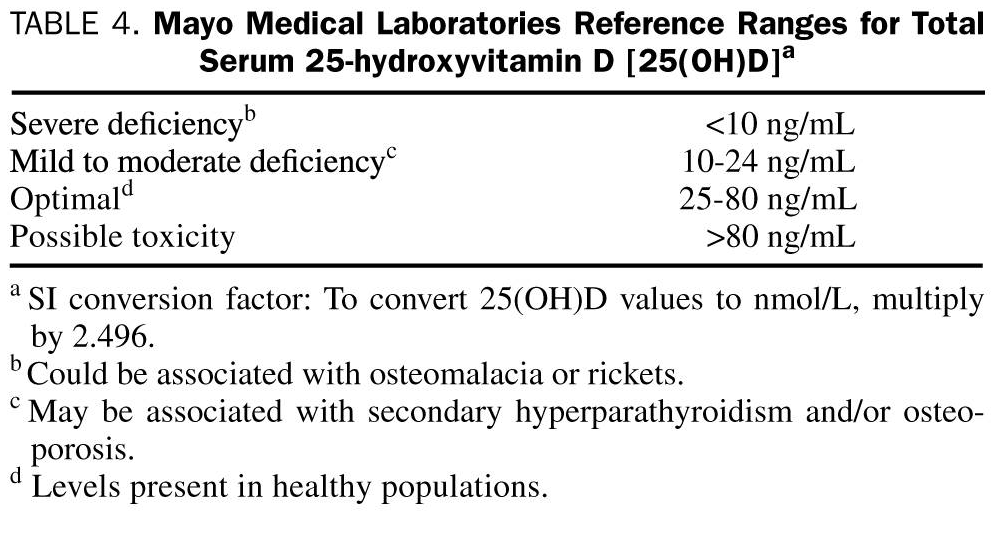
Here according to Mayo, less than 10 ng/mL is too low but greater than 80 ng/mL is toxic.
–
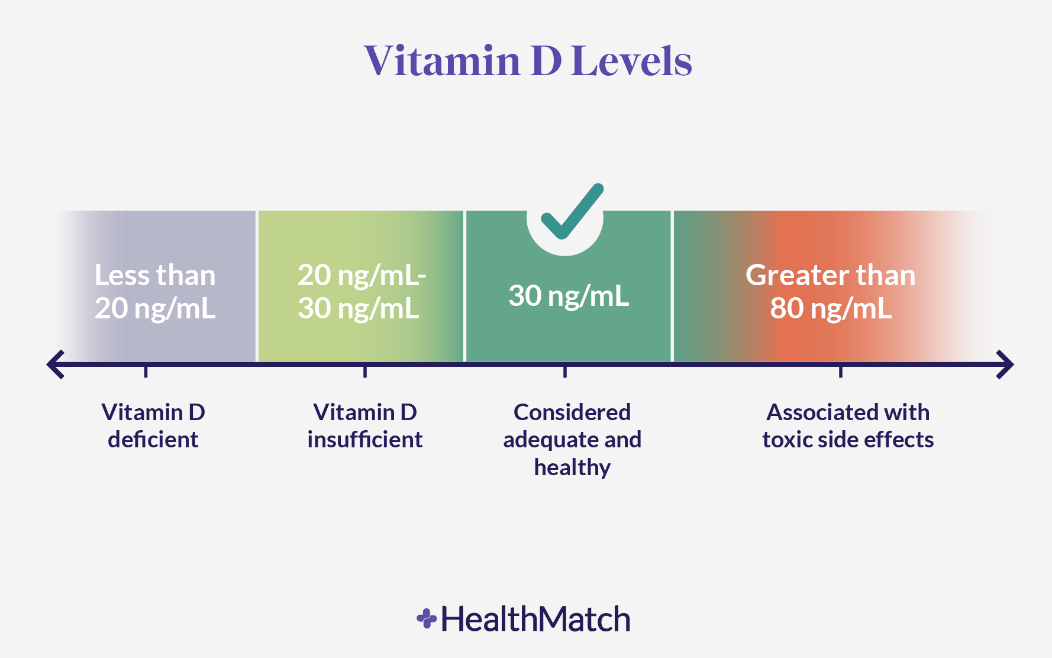
HealthMatch says less than 20 ng/mL is too low but 30 is perfect.
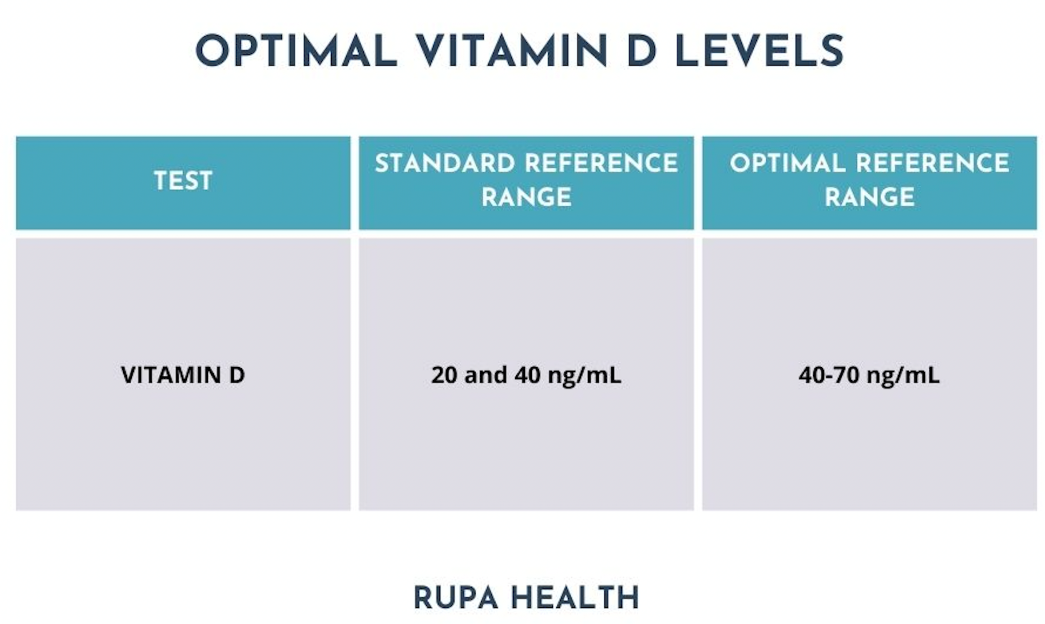
Rupa says 20-40 is the standard reference range, but 40-70 is optimal.
And watch for ‘units’ here. Here in the US, we use nanograms/milliliter to measure vitamin D levels. In Europe they use nanomoles/liter – so make sure when you’re sleuthing this out, that you’re looking at the right units. I’m using “ng/mL”.
Generally speaking, the reference range is determined by the lab. It is a statistical average of the results of the labs they got from the people that went there. If the population the lab is measuring is, you know, people who are most likely vitamin D deficient, what are the results even telling us? It’s giving us a reference range for…deficiency.
So, in my opinion, these numbers are basically useless unless we’re looking to prevent acute illness. Functional medicine is in the business of preventing illness – two totally different paradigms. Based on the science referenced all over the place here, it seems like the optimal level of vitamin D is in the “greater than 50 ng/mL range”. I’m not giving medical advice here, just reading some research papers.
The Metabolism of Vitamin D
There are two main forms of vitamin D:
D2, or ergocalciferol, which is usually plant-based or synthetic (don’t take this, it’s not very stable, not well absorbed)
D3, or cholecalciferol, which is animal-based and more effective at raising blood levels.
Natural food sources of vitamin D3 include fatty fish, like salmon and mackerel, everyone’s favorite – cod liver oil – and egg yolks. Not milk – there’s only vitamin D in milk because we put it there. But, let’s be honest, most of us aren’t probably drinking milk or eating enough of these foods to meet our needs. I actually caught this mackerel, and a fricking barracuda ate half of it before I could get it in the boat. Apparently, barracuda need vitamin D too — ?
And then of course, you get vitamin D from the sun. That’s if you happen to live somewhere that actually sees the sun. Through a process longer than you care me to ramble on about, ultraviolet B (UVB) rays from the sun convert a type of cholesterol in the skin into vitamin D. Reason number 837 why you need cholesterol. And then it heads to the liver for its first step of activation and then to the kidneys for the second step of activation, and then we’re off to the races.
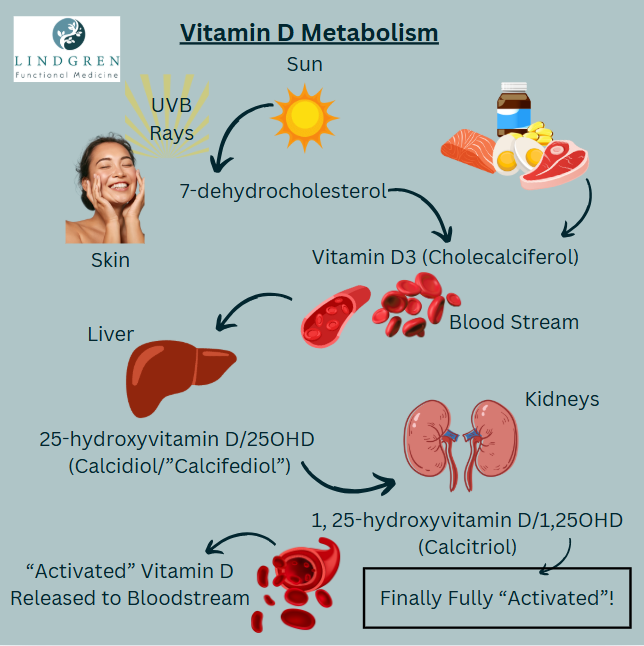
I made this. Isn’t it pretty? Yesss. But the words – there’s so many words. And different words for the same f*ing thing. Here’s the high points of vitamin D metabolism in the plainest English I can muster:
- Vitamin D3 from the sun, supplements, or food is called Cholecalciferol (doctor talk – doctors and scientists need to sound important, so we made up this whole language). Vitamin D2 is a thing, but don’t take that. It’s not stable and not well absorbed. D3 only.
- Vitamin D heads to the liver to become 25-hydroxyvitamin D, also called Calcidiol or Calcifediol (This is the name of the prescription form)
- Then it heads to the kidneys to become 1, 25-hydroxyvitamin D, also called Calcitriol
When you get a blood test (and again good luck if you’re in the system), you’re most likely getting a 25-hydroxyvitamin D level (also called 25OHD, calcidiol, and calcifediol just to confuse you) because that’s the main storage form in the body.
It can take a couple of days to a couple of weeks to fully ‘activate’ vitamin D. Which is why if you take a sick person in the hospital and give them a bunch of regular vitamin D3 from a bottle, it’s not going to work. I’m not giving medical advice here but hypothesizing that you’d be further ahead to give Calcidiol or Calcitriol – you know, cut the line a bit and get some activated D on board. Just a thought.
What Are Common Symptoms of Low Vitamin D?
I’m not talking rickets level of vitamin D deficiency here – I’m talking about ‘below the optimal range’. Vitamin D deficiency can present with a range of symptoms, many of which are subtle and easily overlooked. Common symptoms include:
- Bone Pain:
Aching or tenderness, often in the lower back, hips, legs, or ribs.
- Muscle Weakness:
Difficulty getting up from a seated position or climbing stairs.
- Increased Risk of Fractures:
Especially in the elderly due to weakened bones.
- Fatigue and Low Energy:
Persistent tiredness that doesn’t improve with rest.
Feeling lethargic or having low stamina.
- Mood Changes Depression:
Low vitamin D levels are linked to increased risk of depression, sometimes referred to as “seasonal affective disorder” (SAD) during winter months.
Irritability or Mood Swings.
- Frequent colds or infections:
Longer recovery time from illnesses due to reduced immune system efficiency.
- Poor Wound Healing:
Cuts or surgical wounds may take longer to heal, as vitamin D supports immune response and tissue repair.
- Hair Loss:
Severe hair loss, often associated with stress, may sometimes be linked to low vitamin D levels, though this is less common.
- Dental Issues:
Increased risk of gum disease.
Tooth decay due to poor calcium absorption affecting oral health.
- Muscle Cramps and Twitching
Particularly in severe deficiency, due to impaired calcium regulation.
- Neurological Symptoms
Cognitive difficulties, often described as “brain fog.
Increased risk of anxiety.
What Diseases are Associated With Low Vitamin D?
OK, these sound a little scary, but remember, maintaining adequate levels of vitamin D basically costs nothing. Like pennies a day. Insufficient levels of vitamin D are linked to a variety of diseases and health conditions. These associations stem from vitamin D’s role in calcium metabolism, immune regulation, and its effects on nearly every single solitary system in the body.
- Bone and Skeletal Disorders
Osteoporosis – Weakened bones and increased fracture risk due to poor calcium absorption.
Osteomalacia (adults) – Softening of bones, causing pain and muscle weakness.
Rickets (children) – Severe vitamin D deficiency leading to bone deformities and growth delays.
- Immune-Related Conditions
Autoimmune Diseases
Multiple Sclerosis (MS): Evidence suggests that low vitamin D levels increase the risk of developing MS.
Type 1 Diabetes: Vitamin D deficiency may play a role in the development of autoimmune diabetes.
Rheumatoid Arthritis: Increased risk and severity associated with insufficient vitamin D.
- Frequent Infections
Low levels are linked to increased susceptibility to respiratory infections, including colds, COVID-19, and probably bird flu.
- Cardiovascular Diseases
Hypertension (High Blood Pressure) – Vitamin D deficiency has been linked to elevated blood pressure and cardiovascular risk.
Heart Disease – Increased risk of heart attacks and other cardiovascular diseases.
- Metabolic Disorders
Type 2 Diabetes – Vitamin D deficiency is associated with insulin resistance and impaired glucose metabolism.
Metabolic Syndrome – A cluster of conditions, including obesity, hypertension, and dyslipidemia, linked to low vitamin D.
- Neurological and Psychiatric Disorders
Depression – Low vitamin D levels are associated with increased risk of depression and seasonal affective disorder (SAD).
Cognitive Decline and Dementia – Insufficient vitamin D may contribute to memory loss and Alzheimer’s disease.
- Cancer
Colon, Breast, and Prostate Cancer – Low vitamin D levels are linked to higher risks of developing these cancers, and deficiency may affect prognosis.
- Chronic Pain and Fatigue
Fibromyalgia and Chronic Fatigue Syndrome – Low vitamin D levels may exacerbate symptoms of widespread pain and fatigue.
- Respiratory and Infectious Diseases
Chronic Obstructive Pulmonary Disease (COPD) – Deficiency may worsen respiratory function and increase exacerbation risk.
COVID-19 – Low vitamin D levels are associated with severe outcomes, including ICU admission and mortality.
- Pregnancy-Related Conditions
Gestational Diabetes – Higher risk in pregnant women with insufficient vitamin D.
Pre-eclampsia – Vitamin D deficiency has been linked to this pregnancy complication.
Infertility
- Skin and Hair Disorders
Psoriasis – Low levels may exacerbate this autoimmune skin condition.
Alopecia Areata – Deficiency is linked to increased risk of this autoimmune hair loss condition.
- Other Chronic Conditions
Chronic Kidney Disease (CKD) – Deficiency can worsen bone-mineral metabolism and cardiovascular outcomes in CKD patients.
Non-Alcoholic Fatty Liver Disease (NAFLD) – Linked to metabolic dysfunction associated with low vitamin D.
Quite a list. It makes a person wonder just how much disease and despair would just vanish, if everyone had adequate levels of vitamin D.
How Much Vitamin D Should I Take?
The amount that you as an individual need depends 100% on your individual body. Your age, skin color, body fat composition, diet, medications you may be taking, genetics, gut function, where you live, how much time you spend outside, how much clothing you wear when you go out. How much and how often a person needs/takes vitamin D needs to be tailored to that unique individual and then monitored with labs.
Having said that, I am a medical doctor, but I may not be your medical doctor. I am not recommending or giving medical advice, I’m just reviewing the science here. In the US, the recommended daily allowance (RDA) for vitamin D is 400 international units daily. Vitamin D is usually measured in international units – but sometimes you’ll see it in micrograms. I’ll be referring to vitamin D in units. Not micrograms. Who measures in micrograms…
The average person’s body uses somewhere in the arena of 10,000 to 25,000 units a day. Well, that’s what is made by the skin from sun exposure if you happen to live near the equator and don’t have access to sunscreen. How the government came up with ‘all you need to take is 400 units a day, I’ll leave up to your tin foil hat wearing imagination.
OK I won’t, I’ll just tell you. The RDA or minimal dietary allowance numbers were determined eons ago as the bare minimum amount of a nutrient to prevent an acute disease. These guidelines were created back in the 1940s during the Second World War. There were concerns about food shortages and nutritional deficiencies, so the government put these together to say – hey, you may be starving to death, but make sure you’re getting at least this measly amount of whatever nutrient they were referencing.
RDA numbers are basically the bare minimum amount of something you need to take to keep from dying. These are not in any way shape or form numbers linked to optimal health.
Again, not giving medical advice but based on the studies referenced in this post, optimal daily vitamin D intake appears to be about 10x the RDA. Somewhere in the arena of 2000 to 10,000 units daily.
Having said that, there is nothing shy of absolute hysteria from the conventional medical system around taking too much vitamin D.
What Are The Risks of Taking Too Much Vitamin D?
This is almost a theoretical question because I’ve never seen it. But the concern about taking too much vitamin D is something called hypercalcemia, which means too much calcium in the blood. Remember, you need vitamin D to absorb calcium from your diet. And if you’re taking boatloads of vitamin D, the concern is that you might absorb too much calcium from your diet. Too much calcium – and too little calcium for that matter – are very very bad. We don’t want either to happen.
You’d be surprised at the amount of calcium in your diet. If you eat any cheese or vegetables, there’s actually quite a bit running through that freeway we call your digestive system. But – your body is really smart about calcium regulation. The system has to be really off balance for you to override it with diet or supplementation. BUT it can happen.
My patients love vitamin D, they take a ton of it, and we’ve never seen a single solitary case of high calcium related to vitamin D supplementation. Never. But vitamin D dose use some cofactors in order to do its job, so if a person would be taking larger doses – you know somewhere in the arena of 2000 to 10,000 units daily – it would be advisable to take it with these cofactors. Vitamin D needs vitamin K2, magnesium, and if we’re getting technical – some zinc, boron, and vitamin A. Vitamin K2 is by far, the most important. I’m already way lost in the weeds here, so I’ll leave it at that. D3 should be taken with K2.
But let’s say you’re being sassy. How much vitamin D would a person need to take – without taking any K2 – to cause hypercalcemia. Well – I’m glad you asked. Back to established vitamin D numbers: body uses/makes 25,000 units daily (when there’s sunshine), three letter agencies recommend 400 units daily. Back in the 1930s and 1940s, vitamin D became known for its immune system benefits. Apparently with enough sunshine, you could cure tuberculosis – like the worst, most antibiotic-resistant infection ever.
Because of this, researchers got maybe a little too excited about high doses. Or misplaced a decimal point. There is a study – this one – where the researchers studied vitamin D supplementation for the treatment of all things immune system related (autoimmune disease, infections, cancer) in high doses – really high doses. Doses ranging from 60,000 to 300,000 IU/day. For reference, I personally take 10,000 units a day with 90mcg of K2. And that’s a pretty aggressive dose.
OK – so these researchers found that at these crazy high doses they could cure tuberculosis, control asthma, and ameliorate the symptoms of rheumatoid arthritis. And even though these doses are about an order of magnitude higher than what I would consider necessary to accomplish this goal, these people had absolutely no symptoms of toxicity or hypercalcemia.
Another similar study was published looking at more reasonable doses – Daily dosing with vitamin D from 5000 IU/day to 50,000 IU/day. Still quite generous, but an order of magnitude less than the previous study.
- No cases of hypercalcemia were observed using these doses for up to 7 years
- The highest blood level attained on 10,000 IU/day of vitamin D was 202 ng/ml
- Mean vitamin D levels on 10,000 IU/day were 96 ng/ml and 116 ng/ml in 2 data sets
- Cases of asthma and psoriasis were controlled with 25,000 IU/day and 50,000 IU/day, respectively.
The Bottom Line
- Dosage: For most adults, 2,000 to 5,000 IU of vitamin D3 per day is a safe and effective range, but individual needs may vary. High-dose strategies should be undertaken with medical supervision, meaning – have your labs checked. And if your doctor won’t order it, come talk to me.
- Timing: Take vitamin D with a meal containing fat for better absorption. Take it in the morning – nature gives you sunshine during the day, not at night.
- Combination: Pair it with a high-quality vitamin K2 supplement (magnesium, zinc, boron, and A if you’re being fancy). The average dose on this is 100-200 mcg/day.
- Testing: I personally would aim for blood levels in the range of – well, greater than 50 ng/mL if you want to prevent diabetes or infections, or cancer. I personally like to see that number closer to 100 and we have studies that show even upwards of 200 appears to be safe and not associated with hypercalcemia. But, I can’t say that levels that high provide any benefit above and beyond that which is seen in the 50 to 100 range.
Here’s What You Need to Know About Vitamin D
Sorry, this was a long one! To wrap up, vitamin D is more than just a nutrient; it’s an extremely important hormone that impacts every system in your body. If everyone had optimal levels of vitamin D, it makes you wonder what would happen to the incidence of autoimmune disease, cancer, serious infections, and depression. It’s interesting that most of the data we have is privately funded and done outside the United States.
Eisenhower famously said, if you make war profitable, you’ll always have war. It’s clear to me we’ve done the same with healthcare. By making illness profitable with expensive pharmaceuticals and other medical interventions, well, there’s really no incentive to make people healthy, is there? Vitamin D isn’t a drug. It can’t be patented. It costs a few dollars and so I suspect it will stay relegated to the shelf of dangerous pseudoscience.
Thankfully, you know how to read:) From immune function to bone health and beyond, we know that getting enough vitamin D is an absolute game-changer for your health. Hopefully that information brings some sunshine to your lives, even if it needs to be in supplement form.