
What if everything you thought you knew about depression was a lie? What if the very pills prescribed to ‘fix’ your brain were actually breaking it? Today, we’re uncovering one of the greatest deceptions in modern medicine—the chemical imbalance myth, the dangers of SSRIs, and what’s really behind the mental health crisis.
Whether you’ve been personally affected or know someone who has, we’ve all been touched by the fallout of one of the worst – in my opinion – commonly prescribed classes of medications here in the US. One implicated in acts of terrible violence, severe side effects, and impossible withdrawal. SSRIs are used as the first-line to treat a disease diagnosed largely by patients. Not physicians. Using guidelines that have become looser and looser over time to include larger and larger groups of people. The epidemic of mental illness is real, it’s devastating. And it deserves to be treated by something better than something that could equally make it worse. If learning about the dirty secrets of SSRI antidepressant medications sounds interesting to you, then grab your headphones and let’s go.
The Origins of the Chemical Imbalance Myth
Woody Witczak was 37 years old. He was married to his loving wife Kim for nearly a decade. He had everything to live for. A loving wife, a successful career, and a future full of promise. He had just been promoted to his dream job – VP of sales with a new start-up company. Like many young business entrepreneurs, Woody was having a hard time sleeping. This was his dream, but still – a stressful position.
He went to see his doctor. Someone he knew – someone he trusted.
After sharing his recent problem with sleep, Woody’s doctor prescribed him a sleeping medication. He’d never taken prescription drugs in the past, but his doctor assured him it was safe. Just something to take the edge off – something to help him sleep.
The medication was Zoloft.
Despite receiving no warnings for potential side effects, Woody did just fine with this new medication for the first few days. Perhaps he even slept. But things seemed to quickly change.
Kim knew Woody was stressed, but he’d been stressed before. No big deal. They both had high-profile jobs and had historically done just fine. But something seemed different with Woody. He’d never behaved like this. We all face new pressures in life that seem overwhelming and frightening, but this was unusual. Kim helped her husband calm down. They meditated. They prayed together. Woody was able to settle and fall asleep.
Kim needed to travel for work. She woke up early to leave for the airport. She was reluctant to go, but after countless reassurances from Woody that he was “fine”, she agreed to leave for a short trip.
Within five weeks, the man Kim Witczak had loved and built a life with was gone—dead by suicide. No warning. No history of depression. Just a prescription for a drug he was assured was “safe”.
But Kim would soon learn the truth. Woody’s death wasn’t an isolated tragedy. It was part of a much larger, hidden epidemic—one that has been buried under decades of pharmaceutical lies, government inaction, and media silence.
But Kim didn’t stay silent. She turned her personal tragedy into a mission, refusing to let Woody’s death be just another statistic. In 2016, she was appointed as a Consumer Representative on the FDA’s Psychopharmacologic Drug Advisory Committee, where she has since fought to expose the hidden dangers of antidepressants and hold pharmaceutical companies accountable. Kim became a relentless advocate for drug safety, challenging the same system that failed her husband.
Kim Witczak played a crucial role in pushing for the black box warning on SSRIs, which was added in 2004 to highlight the increased risk of suicidal thoughts and behaviors in young people. Her relentless advocacy helped bring public awareness to the hidden dangers of these drugs, forcing regulators to acknowledge what pharmaceutical companies had long tried to suppress.
There’s obviously more to this story. Let’s get into it.
For decades, we’ve been told a simple story: depression is caused by a “chemical imbalance” in the brain, a serotonin deficiency that can be corrected with antidepressants. This idea has been sold so effectively that over 80% of the public believes it (Nature, 2022).
But here’s the problem: there’s no solid evidence that serotonin levels are linked to depression at all. The diagnosis of depression isn’t based on a brain scan or a blood test. It’s based on a patient self-reporting that they feel depressed. Your husband leaves you. Your child dies from a drug overdose. You lose your job. How are you supposed to feel? Angry? Sad? Hopeless? Is your emotional reaction a disease? It didn’t used to be.
According to Pharma, now, it is.
The definition of depression has been softened, you could say, over the years. Back in the 1980s the DSM-III, otherwise known as the Diagnostic and Statistical Manual of Mental Disorders the handbook used by doctors and mental health professionals to diagnose psychiatric conditions which outlines the symptoms and criteria for mental disorders and is regularly updated by the American Psychiatric Association (APA) – the definition of major depressive disorder (MDD) was determined by a cluster of symptoms – a definition that looked a little bit different then than it does today.
It included depressed mood, loss of interest or pleasure in activities, significant changes in appetite or weight, sleep disturbances, psychomotor agitation or retardation, fatigue or loss of energy, feelings of worthlessness or excessive guilt, diminished ability to think or concentrate, and recurrent thoughts of death or suicide, where at least five of these symptoms were present for a period of at least two weeks.
In 1992, the DSM-IV (1994) came along and started blurring the lines, adding more subtypes and loosening the rules. One big change? The bereavement exclusion. Before, if you lost someone and were grieving, that wasn’t considered clinical depression unless it lasted more than two months. But, in DSM-5 (2013), they scrapped that entirely. Now, you could be diagnosed with MDD even if you’re just experiencing normal grief. So, basically, feeling a normal human emotion got pathologized. And you’ll never guess what came right along with that change—more antidepressant prescriptions.
A comprehensive review published in Molecular Psychiatry (2022) analyzed decades of research and concluded that there is no clear evidence that serotonin activity or levels cause depression. No blood test, brain scan, or spinal tap can measure serotonin levels in a living person’s brain, yet the entire SSRI industry is built on the theory that low serotonin is the root of the problem (Nature, 2022).
Even the very scientists who once promoted this idea have walked it back. Dr. David Healy, a leading psychiatrist and psychopharmacologist, has openly admitted:
“There was never any basis for it, ever.”
Wait, what??
So why do doctors still push SSRIs? Because this story made Big Pharma billions.
Like most rabbit holes I fall into, I didn’t realize I was in one until I was deep down in it. Information – especially medical information is carefully massaged, curated, and if not shiny enough, dressed up like lipstick on a pig. Whatever it takes for you to see what Industry wants you to see. And buy. Let’s be honest. It’s not your blessing they care about. It’s your money.
As I’ve gone deeper into this investigative path of Big Medicine, this has sadly become a recurring theme. I think it goes without saying that corporate interest and big pharma make plenty of money with their drugs and their advertising. I make none. I have no secondary gain other than to help people and hopefully leave behind a legacy reflective of that – or at least a legacy of someone who cared enough to have a set of balls and tell the truth.
Truth telling used to be expected. You didn’t get a pat on the back for telling the truth; you got your ass kicked for lying. Ahhh – how times have changed. The truth I was told as a physician about medications for depression was not the truth. And that was decades ago. The past and present history of SSRIs (and their SNRI sisters) are dark. Really dark. We know this now because of brave investigative journalists, whistleblowers, and harmed patients and families of patients who refused to be silent.
As a physician who used to routinely prescribe anti-depressant medications, I am angry with how we, as prescribers, were deceived. And horrified as to how unknowingly patients were gaslit. A certain someone newly confirmed to the cabinet is lifting the veil on those things impacting public health. For the first time in memorable history, we have hope. Hope that solutions to mental illness will be safer and more effective than what we have now.
What SSRIs Really Are (And What They Aren’t)
SSRIs, or Selective Serotonin Reuptake Inhibitors, are supposed to selectively increase serotonin levels in the brain. But the truth is, they aren’t actually selective, and they don’t measurably increase serotonin because serotonin levels in a living brain cannot be directly tested.
These drugs don’t simply boost serotonin—they rewire and alter brain function in ways that aren’t fully understood. And those changes are irreversible for some. Long-term SSRI use has been linked to permanent neurochemical changes that may never fully recover, even after stopping the medications (Harvard Review of Psychiatry, 2023).
Prozac and the Fluoride Connection
How SSRIs do their hocus pocus in the brain is a bit of a mystery. One proposed mechanism revolves around an inflammatory component. Fluoxetine or Prozac, was the first blockbuster SSRI developed by Eli Lily and approved by the FDA in 1988. A little-known fact is that fluoxetine contains fluorine—a highly reactive neurotoxin.
Fluoride and fluoridated molecule exposure has been linked to neurodegeneration, cognitive decline, and developmental disorders (JAMA Pediatrics, 2023).
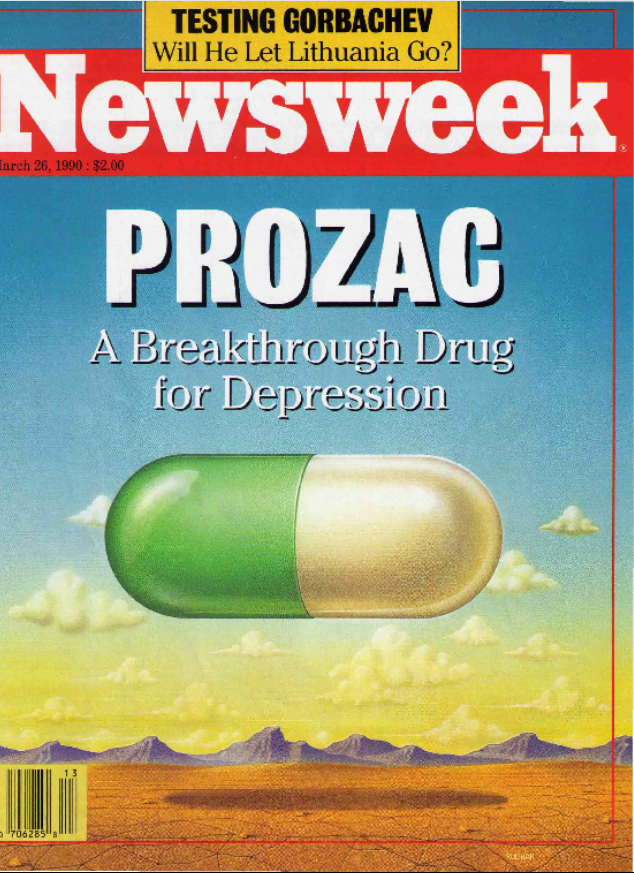
Yet millions of people take this compound daily, believing it’s “correcting” a chemical imbalance. A chemical imbalance that was never proven in the first place.
The Side Effects & Hidden Harms of SSRIs
We’ve been told that SSRIs are safe, but their well-documented side effects tell a different story. Here’s a short list.
- Insomnia, nightmares, strange/vivid dreams, night sweats
- Anxiety, mania, heart palpitations, shaking
- Fatigue, decreased motivation
- Difficulty thinking, ‘brain zaps’, excessive yawning, memory loss
- Stiff muscles, joint pain, blurred vision, jaw grinding, sweating
There’s more.
Sexual Dysfunction
Up to 70% of people on SSRIs experience sexual dysfunction—loss of libido, inability to orgasm, and even something referred to as genital numbness (Journal of Affective Disorders, 2021). That’s exactly what it sounds like. And for some, these effects don’t resolve even after stopping the drug.
Side note: Eli Lilly, the maker of Prozac, also happens to manufacture Cialis, one of the most widely prescribed erectile dysfunction drugs. You know, for the erectile dysfunction that Prozac and other SSRIs cause. It’s a brilliant business model—sell the problem, then sell the solution.
A Spanish study of the five most commonly prescribed SSRIs found that 59% of users reported some degree of sexual dysfunction.
- 57% reported decreased libido
- 57% reported delayed orgasm or ejaculation
- 46% reported no orgasm or ejaculation
- 31% reported erectile dysfunction or vaginal dryness
https://pubmed.ncbi.nlm.nih.gov/11229449/
I think most would agree that an inability to have sex would be depressing in its own right. Often this sexual dysfunction persists even after the medications are stopped. And we’re handing these medications out to young people like candy. Would you take a medication if you knew it had the potential to forever numb your genitals? If you’re taking an SSRI, did your doctor warn you about this before you agreed to take it?
Emotional Numbness
Many SSRI users report feeling emotionally detached—not happy, not sad, just numb. Nearly 60% of SSRI users experience this emotional blunting (Cambridge University Press, 2018). God gave you painful emotions for a reason. They’re meant to help us course correct. Put your hand on a hot stove and the brain says, ‘Hey dummy – the stove is still hot’ and you pull your hand away. Feeling depressed means something is wrong. If it isn’t obvious, then it means we should look. If you don’t feel anything at all, then why bother?
Weight Gain & Metabolic Dysfunction
SSRIs are linked to weight gain and increased diabetes risk, possibly due to their effects on insulin and leptin (Diabetes Care, 2017).
Another interesting side note: Eli Lily—yes, the same company behind Prozac—also manufactures Mounjaro/Zepbound, one of the hottest weight loss drugs on the market. In other words, SSRIs contribute to metabolic dysfunction, but conveniently—Lily has a drug for that too.
Can someone get a statement from Monsanto and Bayer? I feel like they’d approve of this strategy.
Suicidal Ideation & Violence
The black box warning on SSRIs wasn’t just slapped on there for fun. It was the result of tireless advocacy from families like Kim Witczak’s, who fought to expose the link between SSRIs and increased suicide risk—especially in young people.
After losing her husband, Woody, to an SSRI-induced suicide, Kim fought for transparency—and in 2004, the FDA finally issued a black box warning for increased suicidal thoughts and behaviors in children, teens, and young adults. That didn’t include her husband – who was 37. But don’t think for a second that Big Pharma took this lying down. Even today, drug companies are actively fighting to have the black box removed—because, of course, it hurts their bottom line.
When the FDA reviewed Lily’s application for Prozac in 1985, they discovered that they failed to report psychotic episodes of people taking the drug and, in turn, failed to pass that information along to the public. Warning labels on SSRIs now include the potential for side effects like anxiety, agitation, insomnia, irritability, hostility, aggressiveness, and mania. I think those are the same side effects listed for cocaine. And meth.
Bipolar disorder
Because SSRIs work similarly to stimulants, they can often trigger mania in addition to violent behavior. When Prozac was first developed, it was promoted as a ‘mood lifter’. Researchers at Yale reviewed the records of almost 88,000 patients diagnosed with depression and treated with an SSRI. They found that those taking the medication converted to bipolar (i.e. experienced a manic episode) at a rate of 7.7 percent per year. This is three times higher than the rate in patients not taking SSRIs.
Birth Defects
Unfortunately, there are a variety of risks associated with SSRI use during pregnancy:
- Increased risk of premature birth
- Increased risk of congenital heart disease
- Increased risk of pulmonary hypertension
After birth, babies born to mothers who took SSRIs during their pregnancy were more likely to lower birth weight, hypertonia, difficulty breastfeeding, difficulty sleeping, and irritability.
Withdrawal
I would argue this is one of the worst side effects of SSRIs. If you’ve ever gone on vacation and forgot to pack your Zoloft, you know what I mean. These side effects seem to be particularly problematic with Paxil and Cymbalta. Abruptly stopping SSRIs is absolutely not recommended for anyone. Commonly reported symptoms associated with SSRI withdrawal are
- Electric shocks, brain zaps
- Dizziness
- Anxiety, depression
- Difficulty concentrating, brain fog
- Vision disturbance
- Rapidly fluctuating moods
- Suicidal thoughts
- Agitation, restlessness
- Pain, muscle spasms
Coming off of SSRIs and SNRIs is tricky business and should be done at the direction of someone who knows what the hell their doing. I’m no psychiatrist and I’m not giving medical advice, but I can read. And from what I have learned, the best approach seems to be the ‘slow and steady wins the race’ schedule.
Probably the biggest reason for this incredible difficulty to discontinue an SSRI is due to its non-linear relationship between its dose and binding in the brain as depicted here:

https://psychiatryonline.org/doi/pdf/10.1176/appi.ajp.161.5.826
The numbers are hard to see here, but I’ll include the graphic in my post. If you squint really hard you’ll notice that the brain is basically saturated with Prozac at a dose of 5mg per day. 5. Standard dosing is 20-60mg per day – sometimes up to 80mg. What?? I’ll let you be the judge of the rationale behind that dosing recommendation. To safely come off of an SSRI, you basically need to match that curve – and that takes a really long time. As I mentioned earlier, Paxil is particularly difficult to discontinue, because it inhibits its own metabolism. That means as you decrease the dose, you become more and more likely to develop withdrawal symptoms.
To match that curve, one would need to decrease their dose at a progressively slower and slower rate. From the research I found, it seems the safest approach is to reduce the dose by 10% per month. Just for fun, I did the math for 80mg of Prozac. Using this strategy, any guesses on how many months it would take to fully taper off 80mg of Prozac? 51. 51 months – that’s more than 4 years.
Starting, stopping, dose adjusting, and switching antidepressant medications are the riskiest times. Again, it’s best to work with a professional on this but sudden changes can throw the brain into a tailspin.
The Bigger Picture: The SSRI Shell Game
You see the business model yet? Sure you do:
- Turn a normal human emotion into a disease.
- Give people a drug that numbs their emotions.
- When they lose interest or ability in sex, sell them Cialis.
- If they gain weight, sell them Mounjaro.
- If they suffer withdrawals, gaslight them into thinking it’s their depression “coming back” and restart the meds.
- If they die by suicide? Blame their mental illness, not the drug.
- Rinse and repeat.
Still think this is about your health?
These withdrawal symptoms—brain zaps, nausea, mood swings, suicidal thoughts—can last months or even years (Harvard Medical School, 2022). And here’s the gaslight of all gaslights: patients who experience these brutal withdrawal effects are often told their depression is just “coming back.” They’re sent right back to the same pills that caused the problem in the first place.
But that’s not disease recurrence, that’s SSRI addiction. The slow rewiring of the brain required to discontinue an SSRI is analgous to what we see in the brains of addicts as they recover.
There are over 100,000 people in Facebook support groups desperately trying to help each other get off these drugs. The peer-support site Surviving Antidepressants gets over 200,000 visits per month from people looking for answers their doctors won’t give them.

https://www.survivingantidepressants.org/guidelines/
So when mainstream psychiatry tells us “we’ve never seen antidepressant withdrawal” or that it’s “minimal,” should we believe them?
The numbers tell a different story.
The Bigger Agenda: Why This Lie Persists
If the serotonin theory of depression was never real, why does this industry still thrive?
Money.
- The global antidepressant market is valued at over $17 billion annually (Grand View Research, 2023).
- 1 in 4 American women over 40 is on an antidepressant (CDC, 2022).
Psychiatry, instead of looking for root causes of mental illness, has become a prescription mill for pharmaceutical profits. The real problem is that SSRIs don’t actually fix depression. They numb it. They suppress symptoms while ignoring what caused them in the first place.
A Better Way Forward: Real Solutions for Mental Health
So if serotonin isn’t the answer, what is? Lots of things.
- Check your gut health. There’s a reason they call it the “second brain.” (Nature Reviews Neuroscience, 2021). Fix your diet – sugary, ultra-processed, fake foods containing dyes, seed oils, and plastic will poison your brain.
- Get your hormones tested. Low thyroid, low testosterone, adrenal dysfunction and other imbalances can mimic depression.
- Move your body. Study after study has shown exercise is just as effective—if not more—than antidepressants for mild to moderate depression (JAMA Psychiatry, 2023).
- Consider functional medicine approaches. Plant and nutrient-based psychiatry are showing promising results for treating the actual causes of mental distress, rather than simply suppressing symptoms.
Final Thoughts on SSRIs and What They’re Hiding
Depression is not a Prozac deficiency. It never was. It’s a signal. A message. Your body’s way of telling you that something is wrong—whether that’s unresolved trauma, chronic inflammation, gut dysfunction, or a soul-sucking job you hate. The answer is not to shut off the alarm system with a pill—it’s to figure out why the alarm is going off in the first place. A call to action that something needs to change.
I’m not saying that SSRIs are all bad and no one has ever seen benefit from them– but with respect to the bigger picture of depression, we’ve been sold a lie—the chemical imbalance theory was never real, and SSRIs do more harm than good for far too many people. This isn’t just a scientific misunderstanding; it’s one of the biggest medical deceptions of our time. A deception fueled by corporate greed, scientific malfeasance, and regulatory failure at the highest levels.
We have entire generations of people—young, old, men, women—who have been told that their brain is broken and only a pill can fix it. Meanwhile, the drug companies cash in, raking in billions as they profit off both the problem and the side effects they create.
This system was not designed to make you well. It was designed to make you a customer. And once you’re in, it’s damn near impossible to get out.
The solution? It starts with reclaiming our mental health—by addressing the root causes, not silencing them.
And most importantly: start asking questions. Because the people who are most invested in keeping you sick and medicated are not the ones who will give you the truth.