
A Story You’ve Lived
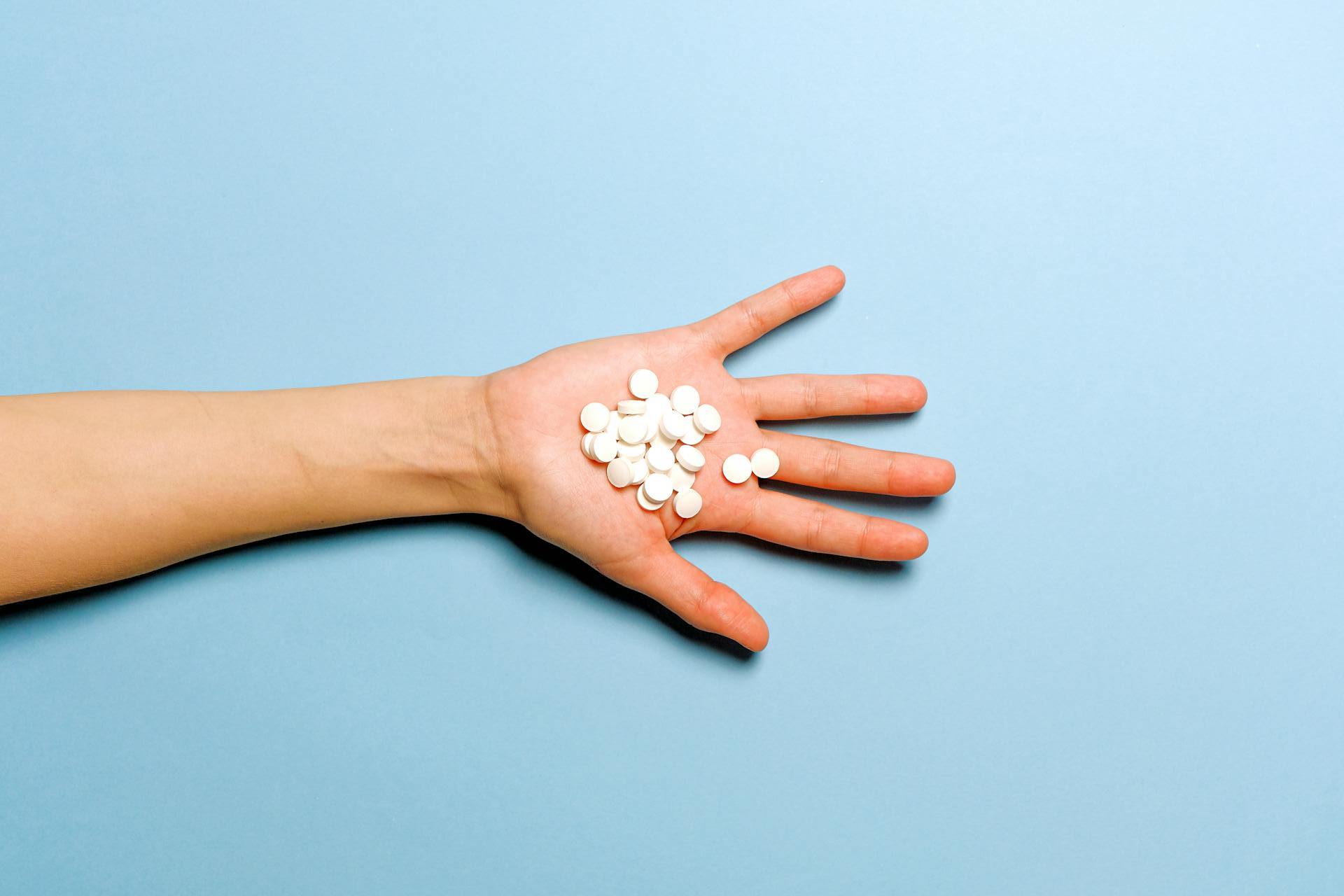
You sprain your ankle. It swells up like a balloon. You hobble to the medicine cabinet, pop a few ibuprofen, and call it a day. You figure it’s helping with the pain and inflammation—just a little pill to get you through the day. No harm, no foul…right?
Well, what if I told you that little pill just sabotaged your body’s ability to heal? That for the next 300 days—yes, nearly a year—your collagen production will be compromised because you interfered with the delicate healing cascade? That your bones, tendons, and ligaments will never fully regenerate the way they should?
And that’s just the tip of the iceberg when it comes to what NSAIDs are doing to your body.
Today, we’re exposing one of the biggest lies in medicine—the “safe and effective” NSAIDs that are anything but. Buckle up.
The NSAID Problem: Why They’re Not Just “Harmless Painkillers”
NSAIDs (nonsteroidal anti-inflammatory drugs) are among the most commonly used medications in the world. Marketed as “safe” and available over the counter, these drugs—ibuprofen, naproxen, diclofenac, and their prescription-strength cousins—are handed out like candy for pain, injuries, arthritis, headaches, and even period cramps.
But what if I told you these so-called “safe” drugs have been linked to heart attacks, kidney failure, gut destruction, bone fractures, and even long-term tendon damage?
Despite decades of evidence, they’re still pushed by doctors, Big Pharma, and regulatory agencies who stand to profit from the chronic pain industry.
I’m on a mission to review some of the most widely prescribed, used, and dangerous medications on the planet. We’ve already talked about statins and SSRIs.
Today, I’m taking down NSAIDs.
If learning why you should throw your Advil in the trash sounds interesting to you, then grab your headphones and let’s go.
What Are NSAIDs?
Non-steroidal anti-inflammatory drugs are marketed as medications that treat fever, pain, and inflammation. They work by inhibiting two enzymes: COX-1 and COX-2.
COX is short for ‘cyclooxygenase,’ so you can just get your mind out of the gutter right now—because I’m going to be saying COX all over the place.
If you’re noticing a pattern here, you should. Many medications work by stopping your body from doing something God very intentionally designed it to do.
The COX enzymes are required for your body to make prostaglandins—signals that repair damaged tissue depending on where they’re produced.
Did you hear that? Prostaglandins fix problems. You need these.
So why would you take a medication that literally stops your body from fixing itself? I’d like to break down exactly how NSAIDs wreak havoc on your health—starting with their impact on healing. Let’s get into it.
How NSAIDs Wreck Your Body
1. NSAIDs Destroy Your Body’s Ability to Heal
Your body has one job when you get injured: repair the damage. It does this through a carefully orchestrated cascade of inflammation, collagen production, and tissue remodeling.
NSAIDs disrupt this healing process by blocking COX-1 and COX-2 enzymes, cutting off the very signals that tell your body to heal itself.
- Collagen Takes 300 Days to Fully Regenerate
NSAIDs block fibroblast activity, which means your body can’t make Type I collagen—the essential protein for repairing ligaments, tendons, and bones.
If you take NSAIDs in the first two weeks after an injury, you are absolutely sabotaging your recovery.
This has been known since the 1990s—yet doctors still prescribe NSAIDs post-surgery and post-injury.
https://journals.physiology.org/doi/full/10.1152/japplphysiol.00942.2010
- NSAIDs Impair Bone Healing
If you have a fracture—even a stress fracture—NSAIDs should NEVER be taken.They disrupt osteoblast (bone-building) and osteoclast (bone-repairing) function, making fractures slower to heal and more likely to re-fracture.
Studies show a significantly higher rate of non-healing fractures (nonunion and pseudarthrosis) in adults who take NSAIDs.
https://woundsinternational.com/journal-articles/ten-top-tips-medications-that-slow-wound-healing/
2. NSAIDs Are a Disaster for Your Kidneys
Your kidneys are your body’s filtration system. They work around the clock, removing toxins and regulating fluid balance.
Every day, they filter about 50 gallons of blood—that’s like all of your blood 25 times. More often than you tell your kids to pick up their crap.
NSAIDs block prostaglandin production, leading to a whole host of problems with your beans.
And like most delicate machinery, your kidneys need proper lubrication to function—in this case, that lubrication comes from – you guessed it – prostaglandins.
NSAIDs block prostaglandin production, leading to:
- Acute kidney injury (AKI)
- Chronic kidney disease (CKD)
- Hypertension (high blood pressure)
- Edema (fluid retention)
- Hyperkalemia (dangerously high potassium levels)
- Nephrotic syndrome (kidney failure)
NSAIDs are one of the leading causes of kidney failure worldwide. Long-term NSAID use increases kidney disease risk by 68-154%, depending on the specific drug. Even short-term use can cause permanent kidney damage.
https://www.kidney.org/kidney-topics/pain-medicines-and-kidney-disease
3. NSAIDs Wreck Your Gut
Your gut wall is your first line of defense against inflammation and autoimmune disease. NSAIDs tear holes in it. By blocking protective COX-1 and the mucosal prostaglandins it makes, NSAIDs thin the stomach lining, causing ulcers and internal bleeding. NSAIDs also increase intestinal permeability (also called “leaky gut”), leading to inflammation and immune dysfunction. They trigger Inflammatory Bowel Disease (IBD) and cause worsening conditions like Crohn’s and Ulcerative Colitis.
NSAIDs are the leading cause of gastrointestinal bleeding. If you cut your finger, you can just take another finger, apply pressure and the bleeding will stop in a few minutes. If you tear a hole in your gut by taking NSAIDs, no one puts a finger on it to stop it from bleeding. It just bleeds – and bleeds and bleeds. When I worked in the ER, we frequently had patients bleed to death on their way to the hospital from Advil. 16,000-20,000 Americans die every year from NSAID-related GI bleeds. Many more are hospitalized with severe ulcers and gut damage.
https://emedicine.medscape.com/article/816117-overview?form=fpf
4. NSAIDs Increase Your Risk of Heart Attacks and Strokes
So where are we at now…You can’t heal. Can’t pee. There’s a hole in your stomach and now you get to have a stroke. Isn’t this fun? All with an over-the-counter painkiller, any teenager can buy from a gas station.
Ok, so on to heart attacks and strokes. The COX enzymes inhibited by NSAIDs also play a critical role in blood clotting and artery health. COX-2 inhibits a prostacyclin that helps to thin the blood. COX-1 enzyme inhibition interferes with normal platelet function which helps your blood to clot. There are some other pathways involved here, but the bottom line is that NSAIDs both increase and decrease clotting at the same time. You might think that would get you a net neutral, but you would be wrong.
Add this strange bleeding/clotting situation to some sodium and water retention from abnormal kidney function to an increase in blood pressure and we have the perfect set up for a heart attack. Or a stroke.
A major study found NSAIDs increased heart attack risk by 24-58%. Certain NSAIDs (like diclofenac) increased stroke risk by 326%. For people who already had a heart attack, taking NSAIDs increased their risk of dying by up to 108%.
The Vioxx Scandal
Anyone remember this nightmare? Let me refresh your memory. It was September 30, 2004—the day Merck finally pulled Vioxx off the market.
Vioxx was an NSAID that selectively inhibited COX-2. People were starting to notice the gut carnage from the COX-1 inhibition associated with traditional NSAIDs, so Merck had the idea to make an NSAID that was ‘safer on the stomach.’ And so Vioxx was born and introduced to the market in 1999 as a ‘safer alternative’ to regular NSAIDs. Well, that turned out not to be the case, actually.
Five years after its introduction to the market, Merck made the decision to electively discontinue production of Vioxx in 2004 – a seemingly respectable move. While it might have been easier on the gut, post marketing data suggested Vioxx had been linked to a small increased risk for heart attacks and strokes. Merck claimed they were acting in the interest of public safety, but you probably won’t be too shocked to find out that they knew about these dangers years before they pulled their wonder drug from the market. Actually they knew about these risks before the drug was even launched.
As early as 1998 (or 1997 – or 1996), Merck’s internal studies showed an increase risk of heart attacks in patients taking Vioxx – something they would obviously investigate right? Something that would halt the drug launch – no?
Well that’s nice. In 2000, a major study known as the VIGOR, or Vioxx Gastrointestinal Outcomes Research, trial showed a 500% increased risk of heart attacks in Vioxx users compared to patients taking naproxen. Five times the risk. Five times the heart attacks. In spite of pre and post marketing data clearly showing a warning signal for both heart attacks and strokes, they sold the drug anyway.
Merck poured $500 million into advertising Vioxx, making it one of the most aggressively marketed drugs in history. Within its first year, 25 million Americans were taking Vioxx. Worldwide, 80 million prescriptions were written. And then, people started dying.
Senate testimony clip Dr David Graham.
Vioxx is gone, but the rest of them aren’t. We’ve known for decades that NSAIDs cause permanent kidney damage, heart attacks, fractures, gut destruction, and tissue degeneration. Yet, they remain widely available and are still recommended as first line treatment by doctors for pain management, arthritis, sports injuries, and even post-surgical recovery.
Chronic pain is a multi-billion-dollar industry. If NSAIDs actually healed injuries, patients wouldn’t need more drugs, surgeries, and procedures. And if they didn’t cause the devastating side effects they’ve been well established to cause, well, the system wouldn’t generate any money treating those things either. There’s no money in wellness. Big medicine is a business.
Better Approaches to Pain Management
Be cautious of all NSAIDs. There are so many safer options for pain management, inflammation, healing acceleration, and regeneration. Instead of relying on dangerous drugs, consider:
- Regenerative Therapies: Cellular regenerative therapies, and peptides that restore tissue integrity.
- Nutritional Support: Curcumin, Boswellia, Omega-3, Magnesium, CBD that reduce inflammation naturally.
- Neurological Support: Low-dose naltrexone (LDN) to retrain the pain response.
- Red Light Therapy & Infrared Sauna: Support mitochondria and reduce inflammation at the cellular level.
- Comprehensive Testing: Identifying and addressing hidden infections, autoimmune issues, and systemic inflammation.
Final Thoughts: Who Profits from Your Pain?
At the end of the day, this isn’t just about one drug.
- NSAIDs are still handed out like candy, despite overwhelming evidence of heart damage, kidney failure, and gut destruction.
- The same doctors, journals, and regulators who let Vioxx kill 120,000 people are still running the show.
- If we don’t start questioning the narrative, reading the fine print, and demanding better alternatives, history will keep repeating itself.
So, the next time your doctor casually tells you to “just take ibuprofen” for that sore knee or back pain, ask yourself:
Do you really trust the system that told us Vioxx was safe?
Closing: Are You Ready to Ditch NSAIDs for Good?
You don’t have to be another statistic in the NSAID injury database.
You don’t have to wreck your kidneys, heart, or gut just to “manage” pain.
And you definitely don’t have to keep feeding a medical industry that profits from your suffering.
Next time you reach for that bottle of ibuprofen, ask yourself: Is it worth the risk? To learn more about how to manage pain naturally please leave a message in the comments section, check out our website, or give our office a call to schedule a consult.