

Hey everyone, and welcome back to the post. Get excited because today’s episode is ‘100% Natural’! You know what that means, right? No, you don’t. No one does. It’s not actually a thing. Today, we’re talking about cracking one of the nuclear codes of the food industry – the mysterious food label. Why is it there? What does it mean? Do you really need to read all those words? You think you’re eating healthy – or you’re actively trying not to. Either way, let’s break down the myth, the legend of the ridiculous ‘Nutrition Label.’ If cutting the crap and getting down to the truth of what’s in your food sounds interesting to you, then grab your headphones and let’s go.
Why You Need to Read Food Labels
It’s already been a long day at work, but you’re not finished. Now, you get to do something you hate even more than going to the gym. Brave the grocery store. You’re not feeling super proud of the frozen chicken tenders in your cart, but maybe you can redeem yourself. You’re standing in the snack aisle, feeling pretty good about grabbing the expensive granola bars for your kids labeled “healthy” and “natural.” Has to be better than those other ones, right? Well… What if that snack is packed with hidden sugars, seed oils, and artificial dyes? Can they do that and still call it “healthy”?
Today, we’re breaking down how to spot the sneaky tricks food companies use and how to easily make healthier choices. Because what you don’t know can hurt you—and your health deserves better. Navigating food labels can be worse than your Twitter feed. Crazy claims, gaslighting, and straight-up lies. You’d be surprised at what’s allowed in food labeling land. This week, I’d like to help demystify the, well, mysterious food label. Words to look for, words to stay away from to make your grocery store dash a little less painful.
Let’s get into it.
Why Food Labels Matter
Your health depends on what you fuel your body with. Processed foods loaded with preservatives, unhealthy fats, and artificial additives contribute to chronic illnesses, weight gain, and fatigue. Food labels are a marketing maize designed to catch attention and confuse consumers. The healthiest foods have no labels, but you live in the real world. You have a job, he has a job, kids are involved in everything, there’s only 24 hours in a day. I get it. You’re buying foods with labels.
You’ve heard you’re supposed to pay attention to labels. You’ve even tried to read them once or twice. But all those words on the back? Can’t even pronounce those. What do they mean? You remember fat grams from the 90s when we took all of those out of food and injected them with garbage instead. You know what a calorie is. Sodium isn’t good for you. Is it? The further down the label you get, the more your eyes glaze over. Forget it. It said ‘natural’ or ‘whole grain’ on the front.
Good enough.
The Front of the Package
These pretty colors and claims are all marketing. It’s mostly just BS aimed at getting your attention. Words like “healthy,” “natural,” and “gluten-free” are meaningless unless you look closer. You’ve got to turn the package around to see the truth. The label is on the back – that’s what you’re looking for. Anything written on the front is fake news. Read the back.
Decoding Marketing Tricks
Acknowledge the buzzwords. Hey, some blue-haired millennial had to navigate the legal code to pick these. It’s admirable, really. If food has to convince you it’s healthy, chances are it’s garbage.
“All-natural”: This is my favorite fake news. In the U.S., the FDA does not have a formal definition of “natural” for food labeling. They have only loosely stated that it means “nothing artificial or synthetic has been added” to a product. However, this does not account for:
- Pesticides: Foods grown with synthetic pesticides or herbicides can still be labeled “natural.”
- GMOs: Genetically modified organisms (GMOs) are often included in “All-Natural” products.
- Processing Methods: Highly processed ingredients can still qualify as “natural.” “All-Natural” is on the front of the packaging, which strongly encourages you not to look at the back of the packaging marketing.
Ingredients derived from natural sources (e.g., high fructose corn syrup, maltodextrin, or carrageenan) are considered “natural,” even though they are far from their original state. These processed components can still carry the “All Natural” label, misleading consumers about the healthiness of the product:
- “Low-fat” or “fat-free”: Low-fat or fat-free means we chemically stripped out the naturally occurring fat in this food and loaded it with sugar or artificial fillers instead. If you follow me, you know that fat isn’t bad for you. Sugar is bad for you. The point of taking fat out to put sugar in is to give everyone diabetes. And cancer. Don’t ever buy anything labeled as ‘low or no fat’ ever again. Apples are fat-free. They don’t have a label saying so. You can buy those.
- “Gluten-free”: Gluten-free is the latest fake news in food labeling. Just bc something doesn’t have gluten doesn’t mean healthy. Many gluten-free products are ultra-processed foods containing artificial dyes, seed oils, and high sugar levels. I have gluten-sensitive kids – I appreciate what Costco is doing here, but seriously. Just stop with the GF crap.
- “Whole grain”: Whole grain means this ultra-processed food contains grains for sure. Like wheat. Wheat is at the top of the list of allergenic foods. And containing whole grains doesn’t mean there isn’t any processed crap or other poison in it. Foods labeled “whole grain” might contain only a small percentage of actual whole grains. The FDA allows a product to carry the “whole grain” label as long as it contains A whole grain, even if the majority of the product is refined flour or other processed crap.
Sneaky Visuals: Packages with pictures of whole grains, fruits, or farm scenes often hide ultra-processed ingredients. Please look past the aesthetic. Food labels are like dating profiles. Hear me?
The Nutrition Facts Panel: Alright, let’s flip to the back and dig into the nitty-gritty—the Nutrition Facts panel. This is the truth serum of the food industry – if you know how to read it.
- Serving Size: This might be the greatest scam of all time. And my biggest pet peeve when it comes to the food industry’s legally acceptable ways of deceiving consumers. Serving sizes are designed to make you think you’re eating fewer calories. This is a throwback to when they told everyone the whole ‘calories in/calories out’ lie. Packages often list unrealistic serving sizes to make calorie and sugar counts appear lower. You plan on sharing that itty bag of chips with 3 other people. I don’t think so. When did your bowl of ice cream have half a cup of ice cream in it? Ahhh – never. Just take all those nutrition facts numbers and multiply them by the total number of servings, and there you go. Before you leave for work tomorrow, all the cookies will be gone. Even if you eat them two at a time.
- Calories: I personally ignore this number on account of the fact it’s figured by the fake serving size. A big number doesn’t always mean bad, and a small number doesn’t mean good. We need to look at what those calories are made of. 200 calories from grapes or almonds is not the same as 200 calories from ultra-processed Cheerios.
- Total Fat: 1985 called and wants its food fear porn back. Please stop panicking at the word “fat.” That whole fat makes you fat situation from the 90s was a lie. Eating garbage and fake food makes you fat. Not fat. Saturated fat is not bad fat. Remember when the media freaked out on us about coconut oil? Now it’s $50/pound? Fully saturated fats are basically the best fat for you. Think avocados, coconut oil, and grass-fed butter. Trans Fats, on the other hand, are a hard no. If it says “hydrogenated” or “partially hydrogenated,” drop it like it’s hot. Trans fats cause inflammation, heart disease, cancer – all the bad stuff.
- Cholesterol: This is an outdated health concern. Every single cell in your body needs and makes cholesterol. Cholesterol is good for you. You need it for your brain. You need it to make hormones. Cholesterol doesn’t cause heart disease – insulin resistance does. Focus on sugar and inflammatory oils. We’re skipping this section.
- Sodium: This can be a little tricky. High sodium is common in processed foods, so massive amounts of sodium are usually an early warning sign that ‘you’re reading the nutrition label of something made entirely of crap’. They use highly processed table salt as a preservative. You don’t want to be eating that anyway. Aim for less than 1,500 mg daily if possible. But don’t fear salt—fear the processed junk it’s hiding in. As an editorial aside, use something better like Himalayan or that delicious expensive Celtic Sea Salt to salt your food at home. Omg so good.

- Total Carbohydrates: These are your sugars and starches.
- Dietary Fiber: High fiber is a good thing. It keeps your digestion happy and helps control blood sugar.
- Sugars: Here’s where you need to watch out. Look for “added sugars”—the lower, the better.
Protein: Higher protein is great, but don’t get duped by those protein bars loaded with sugar and artificial junk. Real food wins every time. The best protein sources are from whole foods like eggs, nuts, and meat – not protein processed in a bar.
% Daily Value: OK, so all these percentages are based on a 2,000-calorie diet, which may not fit your needs. Or anyone’s needs. Use it as a general guide, not gospel.
Reading the Ingredients List
Next up is the ingredient list. These are the hidden offenders. Ingredients are listed by weight. If sugar or oils appear in the first three ingredients, it’s bad news bears.
Hidden Names for Harmful Ingredients:
- Sugar is known by a whole host of different names – agave, dextrose, maltose, cane syrup, high-fructose corn syrup. And just because something doesn’t contain ‘any added sugars’ doesn’t mean it isn’t full of sugar. Look – I’d rather you drink orange juice than a Coke, but they have about the same amount of ‘sugars’. But because the oranges come with sugar, manufacturers can label their juice as having ‘no added sugar.’
- High fructose corn syrup is a whole other monster entirely made from genetically modified corn through fancy ultra processing. It’s different from regular table sugar. And cheaper. Wayyy cheaper. That’s why they use it. It conveniently bypasses normal sugar metabolism and heads directly to the liver, where it is stored as fat. Studies have shown that feeding HFCS to animals makes the animals fat. Don’t eat this. And don’t let your kids eat it either. The food industry allows manufacturers to use the words ‘fructose’ or ‘fructose syrup’ and then claim they contain no HFCS. Love this. Thankfully, the government is always looking out for us.
- Fake sugars or Sugar Alcohols:
- Sucralose,
- aspartame,
- erythritol
- xylitol
- sorbitol
- maltitol
- isomalt
- lactitol
These are all the foods and drinks that taste sweet but strangely have ‘zero calories’. Sugar alcohols are the Jedi mind tricks actual sugar wishes it could do. They don’t raise blood sugar but lie to your pancreas, telling it your blood sugar is high. In response, your pancreas kicks out insulin. A fat storage hormone. This insulin surge causes blood sugar levels to fall. Tanking blood sugar levels tell your brain to eat something. You know these people who are like, ‘I stopped drinking Diet Coke for 6 months and lost 10 pounds’? That’s thanks to the elimination of sugar alcohols.
Sugar alcohols can also affect people in the brain. Makes them depressed, anxious, and tired, but they can’t sleep. Sugar alcohols, by all those names up there, are generally bad. If you need something sweet – just eat sugar. Regular cane sugar. Or honey. Or maple syrup. Don’t eat fake sugar. Please.
- Seed Oils: Remember Dr. Cate Shanahan’s The Hateful Eight. I did a whole podcast on just these. They’re ultra-processed, disgusting, and inflammatory. Oh – and they’re in basically every single solitary processed food on the shelf. Reason 837 to shop the perimeter of the grocery store.
-
- Canola (rapeseed) oil
- Corn oil
- Cottonseed oil
- Grapeseed oil
- Rice bran oil
- Safflower oil
- Soybean oil
- Sunflower oil
- MSG: Lord. I might need to do something dedicated to this monster. I’ll do that later. Look – some people seem to be fine with MSG, others absolutely not. This goes by various names like “hydrolyzed protein” or “natural flavors.” I’m serious. Natural flavors are MSG. OMG. Glutamate is an excitatory neurotransmitter. Excess glutamate is like electrocuting your brain. Folks report flushing, headaches, sweating, chest pain, nausea, and weakness. Animal studies have shown that MSG contributes to weight gain and insulin resistance. As a salt fanatic, I will not lie and tell you it isn’t delicious. Pass the soy sauce, please. Nutritious, though? Not so much.
- Nitrites/Nitrates: These are found in processed meats, beef sticks, bacon, smoked salmon, boxed wine – and are linked to cancer risk. Look for “uncured” or nitrite-free options.
- Artificial Dyes: Red 40, Yellow 5, and Blue 1 can cause hyperactivity and allergic reactions. Oh – and cancer.
Food Dyes:
These are generally poisonous and in everything from candy and sodas to pickles and Pedialyte. They have been clearly linked to cancer risk.
The FDA has recently banned the use of Red Dye No. 3 (also known as erythrosine) in food and ingested drugs due to its association with cancer in laboratory animals. Interesting timing…

This synthetic dye, which imparts a bright, cherry-red color, has been commonly used in candies, baked goods, and certain medications. Manufacturers are required to reformulate their products for food items by January 2027 and ingested drugs by January 2028.
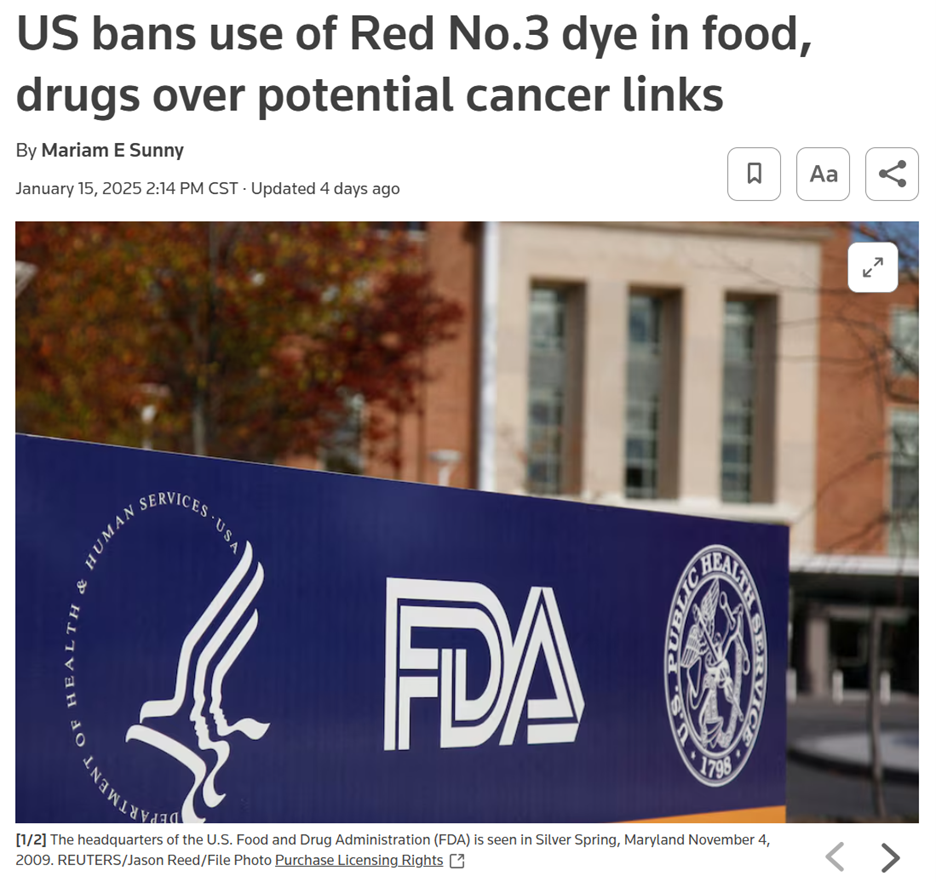
Along with previously banned 2, 4, and 32, Red Dye No. 3 was banned by the FDA. It was banned in 1990 in makeup and skincare products because it was known to cause cancer – in male mice. Who wore blush? No judgment. So Red Dye No. 3 isn’t safe to put on your face, but it was safe to put in Skittles and kids’ Tylenol. For 35 years. Nice. Anyway, so long as manufacturers take it out of their shit by 2027, everyone’s in the clear.
Caramel Coloring: Sounds harmless, right? Well… This innocent-sounding dye is often made by heating sugars with ammonia or sulfites, creating compounds like 4-MEI (4-methylimidazole), a known carcinogen. It’s so controversial that California forced companies to slap warning labels on products with high levels of it. So next time you see “caramel coloring,” just remember it’s less about actual caramel and more about chemical soup.
Tips for Smarter Shopping
Simplify Your Choices: The fewer ingredients, the better. If you can’t pronounce it, don’t eat it. See all these? Forget about it.
Stick to the Perimeter: Most grocery stores stock fresh produce, meats, and dairy around the edges. The center aisles are the lion’s den. That’s where ultra-processed foods go to become rancid and die. Stay out of there.
Certifications to Trust:
- USDA Organic
- Non-GMO Project Verified
- Certified Humane.
Apps for Label Reading: Tools like Yuka or Fooducate can scan labels and flag harmful ingredients. If you’re shopping in an exhausted fog, these apps help you scan and go.
Closing Thoughts on Food Labels
Next time you shop, spend an extra few minutes reading labels. Don’t try to overhaul your entire life. Lord. That took me 10 years. I think you’re awesome, but let’s be honest. None of us are Superman. Start with one category, like snacks or breakfast, and challenge yourself to find the cleanest options. Hey – share your label discoveries and swaps with us on social media. Let’s help each other out. —tag the podcast, and let’s keep the conversation going!
Remember: Every small change makes a big difference in your health. Let’s reclaim the power of choice—one label at a time.