

It looks like food, It smells like food, but is it actually food? As we head into this spooky Halloween season, I thought a good old fashioned medical horror story would be fun. If the reality of Frankenstein foods made right here on American soil served on menus across the nation sounds like a nightmare on Elm Street to you, then grab a pair of headphones and let’s go.
It started innocently enough. A shiny, perfectly ripe avocado—smooth, bright green, practically glowing under the fluorescent lights of your local grocery store. You pick it up, marveling at its beauty – and the fact that you managed to find one that wasn’t as hard as a rock or as mushy as a rotten tomato. Hey – I’m in WI. The struggle is real. But what if I told you this innocent piece of fruit was hiding a dark secret? A secret not on the label… A secret the food industry would rather you not know.
In today’s episode, we’ll uncover a web of deception, that quietly found its way from our nation’s farm fields to our kitchens. We’ll peel back the layers on what’s really being done to our food supply and ask a simple yet unsettling question: How much do we really know about what we’re eating? And more importantly… what are they keeping from us?
From genetically modified organisms, to lab grown meat, to invisible industrial produce coatings.
Ooh the Crunch Enhancer? Yeah, it’s a non-nutritive cereal varnish. It’s semi-permeable, it’s not osmotic, what it does is it coats and seals the flake and prevents the milk from penetrating it.
There’s a new kind of food contamination at play—one we can’t necessarily see, taste, or smell, but one that may be affecting our health in ways we’re only beginning to understand. If food is to be thy medicine, we’d best know what the fuck we’re eating.\
Our investigation on food begins not in a garden or farm field, but in a lab. This is the place where your food’s genetic makeup is determined—where scientists tinker with nature, making crops resistant to pests, droughts, and herbicides like glyphosate. But what does that mean for us, the consumer? For our bodies? And how much of the data that’s supposed to protect us is really influenced by the industries creating these very products? Who’s in bed with who, as they say.
Join me as we try to uncover the truth behind bioengineered foods, the hidden chemicals coating our grocery store produce, and the unintended consequences that could be sitting on your plate right now.
Some hail these advancements in food science as innovation, others… well, they might just call it a crime.
Welcome to ‘What’s Really on Your Plate?’—an episode that might just make you rethink everything you know about food. And reconsider if you’re willing to eat anything you didn’t grow in your own backyard, ever again. Some of these images are straight out of uncanny valley, so if you’re squeamish, perhaps you’d prefer to just listen.
Pesticides, Herbicides, and The Introduction of Genetically Modified Organisms
This story takes us back to the mid-1990s, when something strange began to happen on farms across the world. Corn, soy, and cotton—staples of agriculture—started to change. The plants didn’t grow fangs or spider legs for leaves… but beneath the soil, deep inside their DNA, things were being altered. A pinch of insect poison, a dash of enhanced tolerance to a dry spell. It was the advent of genetically modified foods.
Genetically modified organisms, or GMOs, were sold to farmers and the American public as the saviors of modern farming. Seeds that were pest-resistant, drought-tolerant, and promised higher yields. Bt corn, for example, (named after the bacteria from which it derived its poisonous superpowers, Bacillus thuringiensis) was spliced with a gene that gave the plant the ability to make its own insecticidal proteins. These were the crops of the future.
Farmers were told these new seeds would make their lives easier. They could spray more pesticides, kill more weeds, sit back and watch their crops thrive. But not all was as it seemed. There were whispers in the fields—crops failing, soil health declining, and then… something unexpected. Unless you have half a brain and then you would have seen this coming a mile away. Health problems in humans began to emerge. Was it the pesticides? The GMOs? Or something else lurking just beneath the surface?”
In the decades that followed, these modified crops spread like wildfire. Today, more than 90% of corn and soy in the U.S. is genetically modified. You’re likely eating them every day, whether you know it or not—hidden in vegetables oils, processed foods, and even the sweeteners in your soft drinks.”
And then came the glyphosate. An herbicide so powerful it promised to wipe out weeds and save crops. If we could splice a gene into corn giving it the power to make pesticide, we could certainly splice in another to make it resistant to others. But it didn’t stop there. Why would it? If you spray an entire field with glyphosate, it was bound to go somewhere else. And that it did. It started showing up in our food, our water, and eventually… in us.
The chemical giants assured us it was safe. What’s the big deal? Why should this only be available to farmers? If this stuff killed weeds, well, I have dandelions in my backyard and a bad back. Direct to consumer stores agreed and soon, RoundUp was everywhere. But independent scientists weren’t so sure. Some began to connect the dots—glyphosate in our bloodstream, then a sudden influx of gut health issues, endocrine disruption, and then cancer. In Europe, many GMOs and their corresponding pesticides and herbicides are highly restricted. But here in the US you could say regulators have taken – a more lenient approach.
But GMOs and glyphosate were just the beginning of this twisted tale. Now, something new had crept into our food system, something you wouldn’t even notice unless you knew exactly where to look.”
Apeel

Enter, “Apeel.”
That smooth, waxy coating on your avocado? It’s not just there to keep it looking pretty. Apeel is designed to keep produce fresh longer by creating an invisible barrier, locking moisture in and oxygen out. What happens to the nutritional value of that food underneath its ‘peel’ is anyone’s best guess. No one’s tested it. Nevertheless, it’s been approved by the FDA for use on avocados, apples, and other fruits. Sounds great, right? Less food waste, longer shelf life… what could possibly go wrong?
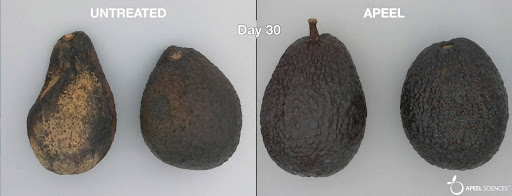
With a mix of industrial oils and a “proprietary list” of ingredients—Apeel has sparked concerns about what’s really being sprayed on and absorbed into your food, and by extension… into your body. The publicly available ingredients in Apeel include mono- and diglycerides, which are often sourced from industrial seed oils. You know, the ones used as lubricants for engines and other machine parts.
There are concerns over the safety of consuming these coatings, especially since the full ingredient list is “proprietary” (that’s code for ‘secret’) and you can’t wash it off. Potential endocrine-disrupting effects and the idea of “hidden chemicals” in this layer have raised some concern by tin foil hat wearing folks like me in the natural health community.
Is it harmless, as they claim? Or is it something more sinister, something designed to fly under the radar of food regulations? What impact could it have on our health over time—on our hormones, our immune systems, our bodies’ natural detoxification processes? These are the questions no one in the food industry seems eager to answer. Maybe because of this:

But there’s more. As if GMOs and chemical coatings weren’t enough, the rise of nanotechnology in food adds yet another layer to this unfolding mystery. Tiny particles—often undisclosed on ingredient lists—are being used to enhance textures, colors, and shelf life. These nanoparticles are small enough to slip through cell membranes and into our tissues… but what happens once they’re inside? What damage could they be doing? And why don’t food companies have to tell us?
If you thought genetically modified organisms were the biggest secret hiding in your food, you’re only scratching the surface. Beneath the layers of GMOs and pesticide residues, there’s something even more insidious… something so small, you can’t see it, taste it, or feel it.
Nanoparticles
These ultra-tiny particles—some less than 100 nanometers wide—are being added to foods, drinks, and packaging, all in the name of improving texture, appearance, and shelf life. But what happens when something that small finds its way into your body? We wrapped a relatively recent gene therapy meant to prevent a relatively new virus which may or may not have been engineered in a lab, also in a lipid nanoparticle. Remember that one? It was supposed to just stay in your arm… Where did it end up?
Nanoparticles are incredibly tiny particles—so small that they are measured in nanometers (a nanometer is one-billionth of a meter). At this scale, they have unique physical and chemical properties that can make them behave very differently from their larger, conventional counterparts. They’re often used in food processing for their ability to improve texture, act as carriers for nutrients or additives, make things colors never once found in nature, and prevent food spoilage.
Some common nanoparticles used in food and packaging include
- Titanium Dioxide (TiO2)
- Silicon Dioxide (SiO2)
- Zinc Oxide (ZnO)
- Silver Nanoparticles
So, why use nanoparticles? The food industry claims they offer incredible advantages—longer shelf life , brighter colors, smoother textures, and better nutrient delivery. But there’s a dark side to this seemingly harmless innovation.

At such a tiny size, nanoparticles can cross biological barriers that larger particles can’t. They can travel through cell membranes, blood-brain barriers, and even enter the nucleus of cells. While they may improve the texture of your frosting, their effects inside the human body are still poorly understood—and what we do know is troubling.
Some of the health concerns associated with nanoparticles include increased absorption of…well, anything that small – as well as cellular damage, mitochondrial dysfunction, immune system disruption, and their ability to cross the blood brain barrier potentially interfering with neurologic function and risk of conditions like Alzheimer’s, Parkinson’s, and mood disorders:
And the worst part? You’ll never know they’re there.
That bright white frosting on your favorite store-bought cupcake? The powdery coating on that gum you just popped in your mouth? It may very well contain nanoparticles—and there’s no legal requirement to label them.
Unlike genetically modified organisms, which are starting to show up on labels, nanoparticles fly completely under the radar. There’s no mandate to list them on food labels, leaving consumers in the dark about what they’re really eating.
Nanoparticles are found in a variety of foods and food packaging, though they are rarely listed on the label. They are commonly found in processed foods, fast foods, food packaging, and even some dietary supplements.
So, how do you avoid something you can’t even see?
Bioengineered Meat
Let’s move on – there’s more. And this is good. Picture this: a sterile laboratory, fluorescent lights reflecting off gleaming countertops. In the center of the room stands a huge bioreactor—a tank filled with a strange, viscous liquid. Inside that liquid, something is growing. Not a plant, not a virus… but something that looks eerily like meat.
This isn’t the result of farming, nor the end product of animal husbandry passed down through generations. This is lab-grown meat—also known as cultivated, cellular, or bioengineered meat—a product created from living cells, extracted from animals, and grown entirely in a lab.
This new Frankenmeat is created by taking animal cells—usually muscle cells—and growing them in a controlled environment, outside of the animal’s body in a stainless steel bioreactor. The idea is simple: create meat without needing to raise it, feed it, or take it to slaughter. Easy peasy.
Scientists begin by taking a small sample of animal cells, often through a tissue biopsy. These cells are typically taken from a cow, pig, or chicken. The cells are then placed in a growth medium, a nutrient-rich solution designed to mimic the environment inside an animal’s body. This solution contains sugars, amino acids, and even hormones to stimulate the cells to grow and multiply. Over time, the cells grow into muscle fibers—the building blocks of meat. But unlike natural meat, this tissue doesn’t organize itself into complex structures like fat or connective tissue. It’s a mass of muscle cells, plain and simple. Once the cells have multiplied enough, they’re harvested and processed into something that looks like meat—at least, that’s the goal.
It sounds like science fiction. And in many ways, it is. But the reality is already here. Lab-grown chicken nuggets, burgers, and ‘sausages’ are making their way to a grocery store near you, sold under the banner of sustainability and ethics. Proponents say it’s cleaner, faster, and healthier. You know over population and climate change… This could fix all that. But there’s something off about this meat. Something… unsettling.
You’ve probably seen the pictures on TikTok: pale, lifeless masses of ‘chicken’ tissue growing in petri dishes. Meat that doesn’t quite look like meat—more like something from a science experiment gone wrong. It’s missing the familiar textures, the marbling of fat, the natural variation you expect in a real piece of meat. It’s truly Uncanny Valley meets – well, meat.
That’s because bioengineered meat doesn’t develop like real meat. It’s meat, but it’s not. Actual meat eats actual food, roams in an actual pasture and not a stainless steel vat. It thinks about sex and who best to have it with. And where. Meat grown in a lab lacks – I don’t know where even to start here… It lacks the muscle structure that comes from an animal’s movement as well as its entire natural life cycle. Instead, it’s grown in a stagnant environment, without the exercise or metabolic processes and stress that create the complex flavors and textures of traditional meat.
What’s Really in This Meat?
The growth medium used to cultivate the cells is one of the most controversial aspects of bioengineered meat. In the early days, labs used fetal bovine serum (FBS), a nutrient-rich fluid extracted from the blood of unborn calves. But this raised both ethical and safety concerns. After all, if one of the goals was cruelty-free meat, using fetal animal blood seemed like a contradiction.
Today, companies are scrambling to find synthetic or plant-based alternatives to FBS, but that leads to another concern: what chemicals are being used to feed these cells? What synthetic hormones, antibiotics, or growth factors are part of the process? And how do those substances affect the final product?
Proponents claim that lab-grown meat is cleaner, safer, and healthier than traditional meat. But there are questions no one seems eager to answer: How do the synthetic chemicals used in the process affect our health? And what happens when something that was never meant to grow outside an animal’s body ends up inside our bodies?
“The truth is, no one knows.”
Lab-grown meat is so new, we haven’t had time to study the long-term effects. Sure, it’s meat—at least, in the most basic sense of the word—but it certainly isn’t the same meat our bodies evolved to consume. What happens when we introduce something entirely foreign into our systems? You know, like genetically modified organisms and brand new untested safe and effective infection prevention technologies?
There are several health concerns surrounding bioengineered meat, though they remain speculative due to the lack of long-term research. Unnatural growth medium, altered nutritional profile, microbial contamination, unknown long-term safety effects. Will consuming meat grown from immortalized cell lines—which are used to produce endless quantities of cells—have unintended consequences for our metabolism, immune system, or even cancer risk? And what is it with this guy…
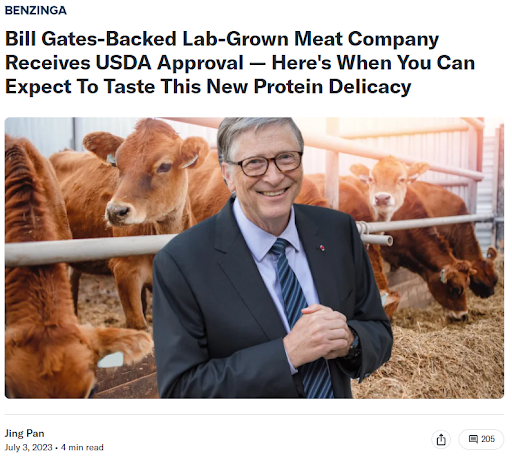
Bill Gates is a prominent investor in the lab-grown meat industry, also known as “cellular agriculture” or “clean meat”:
Gates has invested in several companies that produce lab-grown meat, including Memphis Meats, a Silicon Valley startup that produces beef, chicken, and duck from animal stem cells.
Gates has called for wealthy nations to eventually switch to 100% synthetic beef. He believes that alternative proteins are necessary to support the growing population and to reduce the environmental impact of the meat industry.
Conclusion
The truth is, we’re standing at a crossroads. Bioengineered meat might be the future of food—sustainable, cruelty-free, and more efficient than traditional farming. Or… it could be another Pandora’s box, filled with unintended consequences we can’t even begin to predict.
And like most things in the food industry, it’s likely we’ll only find out when it’s already too late.
The more we dig, the more we uncover layers of secrecy in our food supply. From genetically edited crops using CRISPR technology, to lab-grown meats engineered without ever seeing a pasture, the food on our plates is rapidly evolving into something… unrecognizable.”
What started with basic genetic modification has grown into an entire industry of synthetic biology, where scientists are now creating new organisms and modifying natural ones at will. But with each new development, the question remains: What’s happening to our health in the process?
While the regulators assure us it’s all safe, more and more studies are quietly popping up, linking these modified foods and chemicals to chronic diseases—autoimmune conditions, hormonal imbalances, even neurological disorders. And yet… no one seems to be hitting the brakes.
As a family tradition, my husband and I take our kids out of the country for the holidays. I have no plans to get on an airplane that might fall out of the sky or crash into a runway this year, but historically holiday travel was the gig. My kids would always grab some garbage snacks from the newsstand during a layover – the wrappers of which I would eventually find while emptying suitcases. This soon became a fun game – maybe more for me than for them. You can purchase the same bag of cool ranch Doritos from a grocery store outside of the US that you can in the Atlanta airport. But flip it over and look at the ingredients. Processed foods exported to other countries contain about half the garbage. Most countries won’t even allow the crap we feed our fellow Americans in their front door. Why is that?
As I said before, if food is to be our medicine, what’s safe to eat. In my humble experience, the further we get away from nature, the more we tend to fuck things up. I’m not suggesting you throw your smart phone in the trash and join a hippie co-op in the country, but…
It’s becoming increasingly clear that we take close stock of what we put in our bodies. I’m not saying there isn’t an obvious upside to these modern advancements in agricultural science – it’s the potential risks that should give us pause. The retail mogul, Costco, initially partnered with the maker of Apeel in 2018. The backlash from consumers was severe and they’ve since parted ways. You probably won’t see apples with Apeel in their produce section anymore, but watch out for Target, Kroger, and Walmart.
While the USDA has approved lab-grown chicken from two companies—Upside Foods and Good Meat—these products are primarily being served in select upscale restaurants in cities like San Francisco and Washington, D.C. Good for them! It could take a few more years before lab-grown meat is available in supermarkets near you, but it’s coming. For things that do contain labels, it’s important to read them – look out for “cell-cultivated” or “cultured meat”.
Since labeling laws don’t require companies to disclose the presence of nanoparticles in food, it’s challenging for the average consumer to avoid those. However, there are some steps you can take:
- If you’re not eating your own, buy unprocessed, organic foods.
- Buy foods with 5 or less ingredients.
- Don’t buy food if it is a color that you can’t find in nature.
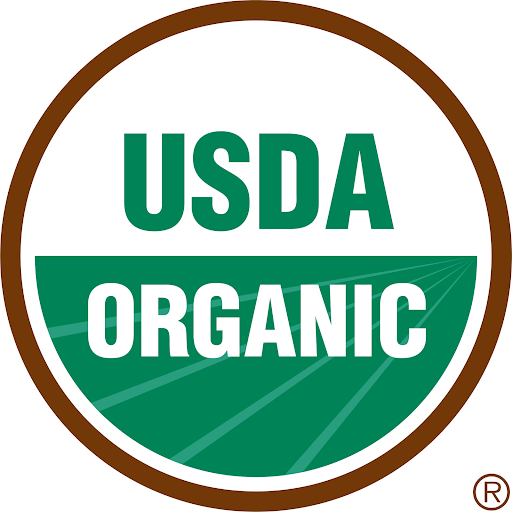
If you didn’t grow it in your backyard, the green and white USDA Organic symbol is what you’re looking for when shopping. That means no chemical fertilizers, no growth hormones, no GMOs, and no synthetic pesticides. Those other look alike feel-good labels like “100% Organic”, “Organic”, and ”Made with Organic Ingredients” are all sneaky work arounds. Code for ‘well, we’re kind of organic, but not really”.
We shouldn’t have to be this neurotic, but if you’re not watching what they’re putting in our food, who is? This is where the true crime of our food supply comes into focus. We have a system built on secrecy, corporate interests, and a regulatory framework that seems more interested in protecting profits than public health. If we can’t trust what’s on our plates, where do we turn? And more importantly, how do we protect ourselves from the dangers lurking in our food? In the end, the question isn’t just about what’s in our food… it’s about what’s being kept out of sight, and who’s really in control of our food system.
Because what you don’t know… could be making you sick.