
Your Cells Know You’re Stressed Before You Do – Why You Might Be Both Healed and Not Healed Until You Check Your Twitter Feed.
Imagine you’re both asleep and awake. Healthy and sick. Zen and mildly homicidal.
Until one of your kids texts you “k?” and your entire emotional state collapses into a simmering rage.
Welcome to the strange world of quantum biology — where Schrödinger’s cat meets your mitochondria, and the placebo effect suddenly makes a lot more sense. Stay with me here, people – I promise this will be infinitely useful.
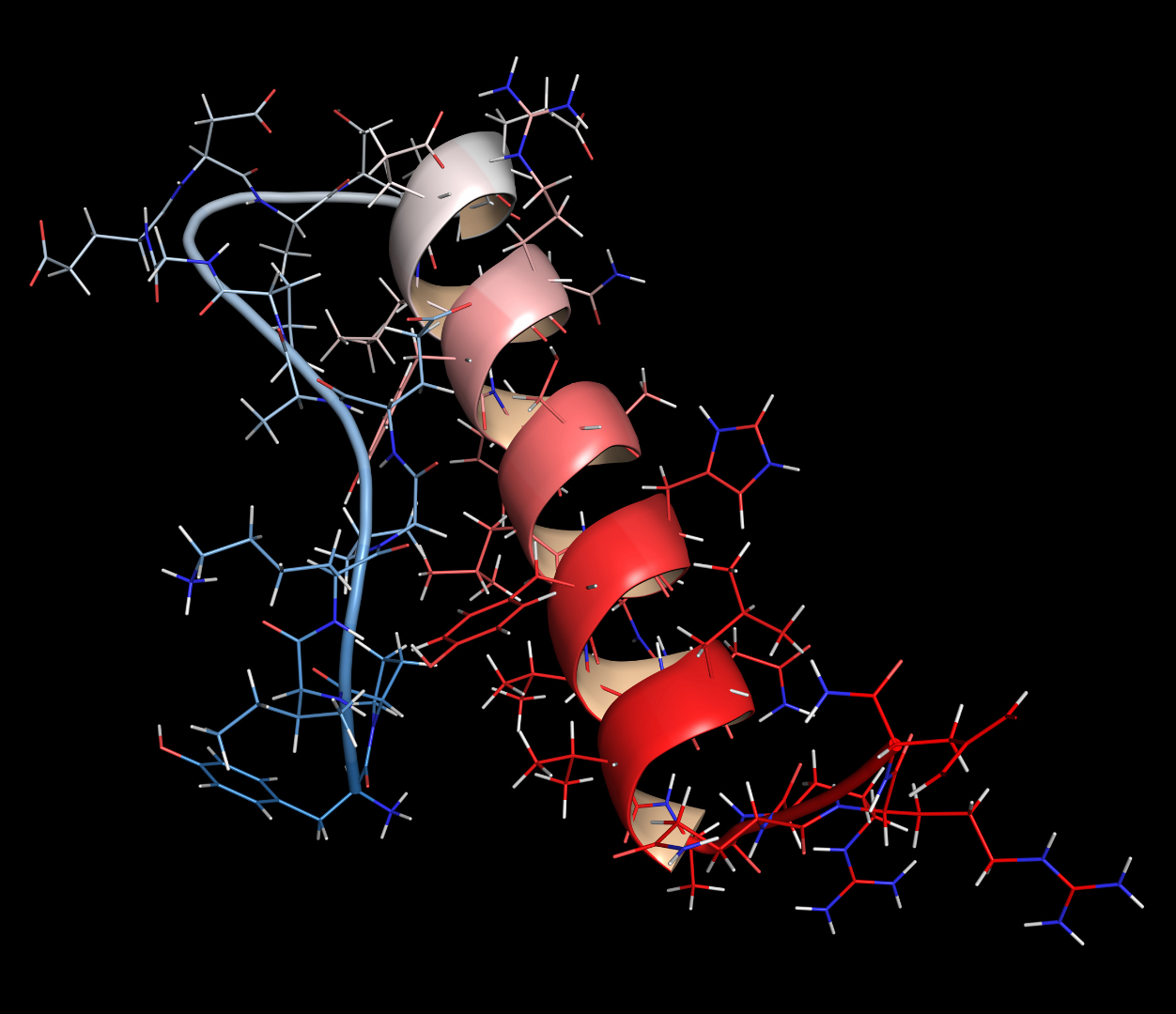
This is Episode 7 of The Peptide Files, and today we’re diving deep into the world where physics, physiology, and the power of the mind collide. And while peptides might be the messengers, today we’re exploring the quantum switchboard they’re all plugged into. It’s not just atoms being weird — it’s YOU being weird. At a subatomic level.
I’m Dr. Kristen Lindgren, and welcome back to the Peptide Files, folks. Quantum physics meets biology might sound boring, but I promise it’s not. This is exciting stuff. Let’s get into it.
Quantum Mechanics for Real People
“I think I can safely say that nobody understands quantum mechanics.” — Richard Feynman
Let’s start with a simple-ish question: what is quantum mechanics?
It’s the study of how tiny particles behave in ways that totally defy logic. They don’t follow the rules of our everyday experience—or basically anything you were taught in elementary school science class. Instead, they play by two rules and two rules only: probability and uncertainty.
You were told that everything around you is made of atoms. Grass, trees, birds, buildings, other humans—all made up of atoms. Sure, there are different flavors of atoms (insert dramatic shot of the periodic table here), but at their core, all atoms contain three familiar things: protons, neutrons, and electrons.
We all learned that these were the tiniest bits of matter. The protons and neutrons chill in the center—called the nucleus—while the wild-child electrons zip around the edges in orbits, somehow never crashing into the nucleus despite their opposite charges. Aren’t opposites supposed to attract? Ignore that for now.
Turns out… that’s not the whole story.
Inside those protons and neutrons? Even smaller particles. Meet the quarks—specifically, up quarks and down quarks. (Yes, that’s what they’re actually called. Physicists were apparently conserving creativity for the Higgs boson.)
Then you’ve got the electrons—same ones we already met—plus the ghostly neutrinos, mysterious muons, energetic bosons, and that famous “God particle,” the Higgs boson.
We’re talking particles smaller than atoms—quarks, leptons, even neutrinos that barely interact with anything. These are the real Lincoln Logs of reality. And they don’t behave like anything you’d expect from the Ikea instruction manual of physics.
If your brain’s starting to rebel, good. You’re right on schedule.
Now—forget the particle names for a moment. Seriously. Let them go.
What matters is this: in the strange world of quantum mechanics, particles don’t always act like little chunks of stuff. Sometimes they act like waves—rippling, non-local, spread-out possibilities. And sometimes they act like both. Or neither. Or something in between.
Think grains of sand. Now think water waves. Quantum particles can be both at once. They can be a grain of sand and a ripple in a pond.
Beyond those (relatively) graspable concepts, we get into the fun stuff—the mind-bending principles of quantum physics. Here are three you need to know, or at least hear me say once so you can pretend to understand them at parties:
- Superposition: A particle can exist in multiple states at once—like being in two places simultaneously. A quantum particle can cook dinner and pick the kids up from school at the same time. Moms, take note.
- Entanglement: Two particles can become so connected that what happens to one instantly affects the other—even across the universe. Speed of light be damned. One particle on Earth gets great news, and its entangled twin in the Andromeda Galaxy suddenly spills coffee on its shirt. Einstein famously called this, “spooky action at a distance.” See? Even he didn’t get it.
- Wavefunction Collapse: Things only “decide” what they are when you observe them. Until something is measured or looked at, it exists in a state of pure potential. As in—reality doesn’t commit until someone’s watching. (Looking at you, social media.)
And this brings us to the infamous Double Slit Experiment.
“If quantum mechanics hasn’t profoundly shocked you, you haven’t understood it yet.” — Niels Bohr
This is the Experiment that Broke Physics
In 1801, a scientist named Thomas Young wanted to understand how light worked. So he did what all good scientists do: he poked at reality with a stick.
He fired electron particles at a screen through a single slit. What he saw was expected—a clumping pattern. Neat. Predictable.
Then, he tried it with a wave. Light as a wave also created a similar pattern on the screen—densest in the center, fading outward.
But then… he added a second slit.
And that’s when things got weird.
When waves pass through two slits, each slit creates its own wave. These waves interfere with each other—sometimes amplifying, sometimes canceling out—creating a pattern on the screen called an interference pattern. Imagine alternating bands of light and dark like ripples on a pond meeting.
So far, so good.
Then he fired particles at the two slits—expecting to see the same clumping pattern as before.
But he didn’t.
He saw the interference pattern.
Particles—things with mass—were behaving like waves. Somehow, each particle seemed to split in two, go through both slits at once, and interfere with itself.
This was not supposed to happen.
Scientists figured, “Maybe the particles are bouncing off each other—interfering like a crowd at a concert.”
So they slowed it down. Way down. Fired one particle at a time.
Still… the interference pattern.
Something wasn’t adding up. What’s going on there?
Decades later, in the 1960s, physicists added a twist. They installed a detector just behind the slits to watch what the particles were doing as they passed through.
And just like that—poof—the interference pattern vanished.
The particles behaved normally again. Clumping, like… particles.
Take the detectors away? Interference returns.
Somehow… the particles knew they were being watched.
That’s right: Observation changed the outcome.
Then came physicist John Wheeler, with what he called the Delayed Choice Experiment. He moved the detectors to a point after the particles had already passed through the slits—halfway between the slits and the screen.
Particles passed through… like waves.
Then, after they passed the detectors, they changed their behavior. The screen showed particles – the clumping pattern. Reality seemed to be rewriting itself after the fact—as if the universe was waiting to see if anyone was paying attention before deciding what story to tell. It was as if the particles went back in time.
Your attention literally alters reality.
It’s the scientific version of, “If you watch water, it won’t boil.”
But this time, it’s not just your kettle. It’s the fabric of the universe itself.
Schrödinger’s Cat, or How to Traumatize Pet Lovers
Physicist Erwin Schrödinger, in an attempt to highlight how bizarre quantum mechanics is, proposed this completely bizzaro thought experiment:
Put a cat in a box with a radioactive atom, a Geiger counter, a hammer, and some poison. No, for real – this was the “scenarioe”. Clearly not a cat lover. Anyway, if the atom decayed, the hammer would break the vial, and the cat would die. If not, the cat lives.
BUT — since the atom’s state is probabilistic – meaning it has a 50% chance of decaying and a 50% chance of remaining stable, the cat is technically both alive AND dead until someone opens the box. Both here and there until it’s observed.
That is superposition.
Also, no, animal control was not consulted.
The Mind-Body Quantum Bridge
So what does any of this have to do with YOUR body?
Turns out, quite a bit.
Recent research in quantum biology shows that biological systems — your cells, your DNA, your brain — may operate under these same principles that no one really understands.
Let’s start with the heart-brain connection.
According to the HeartMath Institute, your heart generates the largest electromagnetic field in the body — and it can entrain the brain. That means your emotional state can create measurable coherence in brainwave patterns.
One measurable way we see this in action is through something called heart rate variability, or HRV. It’s not just a fitness metric — it’s a reflection of your autonomic nervous system’s responsiveness and your body’s overall coherence. Higher HRV is linked to emotional regulation, resilience, and even improved immune response. It’s almost like your heart is broadcasting a quantum status report in real time — syncing up the rest of your physiology to match your emotional state.
Meditation, prayer, intention — they don’t just make you feel better. They actually change the way your body is wired and firing.
Your thoughts are not just thoughts. They’re quantum commands.
DNA Emits Light. Literally.
Your DNA gives off biophotons — literal light. Not metaphorical light. Not New Age sparkle emojis. Actual, measurable light emissions.
When people meditate, the emission patterns change. When you’re stressed, they change again.
Scientists have even proposed that this light might be part of an internal communication system — a kind of bio-optical internet within the body, signaling cells and tissues to synchronize or respond.
So what if your thoughts are doing more than just shifting neurotransmitters? What if they’re rearranging light?
Is healing less about chemistry… and more about coherence?
It might explain why one person responds to treatment like magic, and another — same labs, same supplements or medications — gets nowhere.
Their wavefunction hasn’t collapsed into healing yet.
Placebo, Quantum Style
The placebo effect is often dismissed as “oh, your pain got better from the sugar pill because it’s all just in your head.”
But what if the head is precisely where the healing starts?
Studies show placebo works up to 72% of the time for pain, anxiety, and even Parkinson’s symptoms. That’s not just chance. That’s quantum.
You see, the brain doesn’t just process belief — it turns it into biology. When someone believes they’re receiving a treatment, the body responds with real physiological changes: endorphin release, neurotransmitter shifts, immune modulation.
In other words, expectation changes outcome.
Your belief systems may be entangled with your biology — and belief, intention, and perception could be the observer that collapses the wavefunction of illness into health.
It’s not “just in your head.”
It may be starting there and rewiring everything else.
Your Cells Are Listening
Think about this: cells communicate using electromagnetic signals faster than biochemical ones. We’re not just talking about hormones and neurotransmitters—there’s an electrical language beneath the chemical one.
Quantum coherence may allow your body to sync and share information instantly — a living, entangled network of vibrating, communicating matter. When your body is in a coherent state, signals travel faster, cells respond more efficiently, and your whole system operates like a fine-tuned instrument.
This might explain:
- Why emotions impact immune function
- Why stress wrecks gut health
- Why two people exposed to the same toxin respond wildly differently
- Why you “just know” when something is off in your body before tests show it
It’s not just genes. It’s your energetic state. It’s coherence.
And coherence might be the biological version of alignment—when everything’s playing in harmony instead of chaos.
Mitochondria and Quantum Fuel
Your mitochondria are sensitive to more than food.
They respond to:
- Light
- Sound
- Electromagnetic fields
- And your mental state
These tiny powerhouses are more than just calorie converters. They’re sensory organs for your internal and external environment. When exposed to light, vibration, or even emotion, mitochondria adjust energy production accordingly — sometimes amplifying, sometimes suppressing.
So yes, your mitochondria know you’re stressed before you do. They feel the signal, and they might even downregulate ATP production to match your mental and emotional chaos.
When you’re in a state of coherence — emotionally balanced, present, and aligned — mitochondria optimize energy flow. But when you’re fragmented or anxious, they conserve and retreat.
Quantum biology suggests that energy isn’t just about calories in. It’s about coherence out. It’s about signal clarity between your heart, your brain, and your cells — a symphony of physiology that can either hum or fall out of tune.
So here’s your takeaway:
Your biology isn’t a machine. It’s a probability cloud. It’s responsive. Conscious. And it might be more influenced by your attention, intention, and beliefs than by anything else.
Healing might not just come in a pill. It might come from observing yourself differently.
Because, like Schrödinger’s cat, maybe you’re already healed.
You just haven’t opened the box yet.
And one last thing…
Our entire practice logo — for Lindgren Functional Medicine — was inspired by this very image: two photons dancing across time and space, forever connected. Just like the quantum peptides within you — sending messages across cells, systems, and subtle fields of energy.
If you’ve ever followed the work of Dr. Joe Dispenza, you know he’s been talking about this kind of healing for years. The power of thought, belief, visualization — not just as woo, but as quantum biology in motion. Whether you call it intention, coherence, or tuning into the field — this is where science and spirit collide.
You are the observer.
You are the experiment.
And yes — you are the medicine.
So spend time in stillness. Practice self-awareness. Be mindful of the reality you experience right now — and if something needs to change, see it, believe it, feel it. With infinite possibilities available, healing isn’t just possible — it’s quantum.